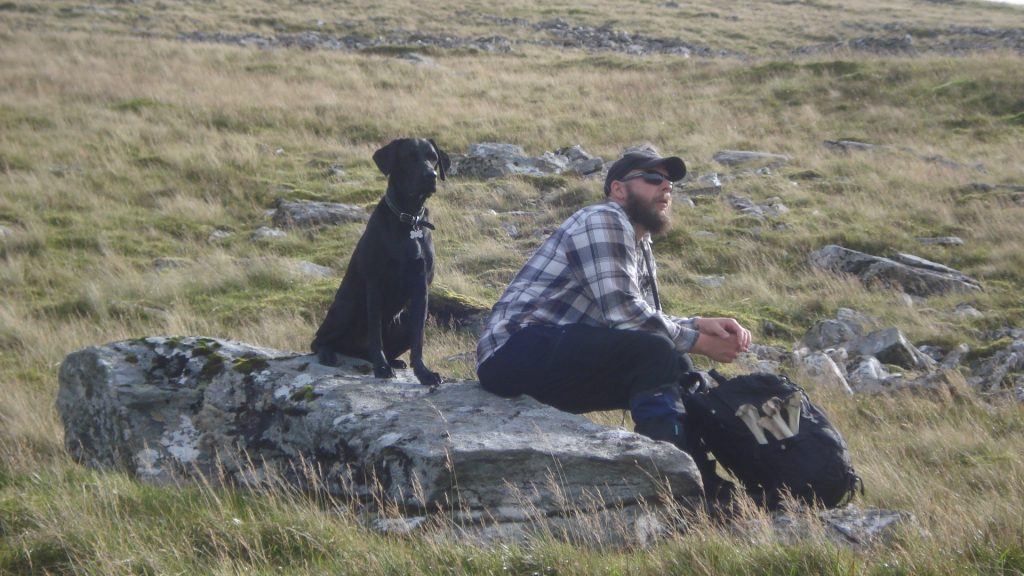
I don’t know about a mackerel covered sky but it’s quite heavy with rain this morning and the dog is still in the kitchen, wet and miserable, as he’ll have to stay there until he’s dry and then for most of the afternoon too, which he’ll be most put out at! Looks like he’s in for a day of sulking. It’s actually even worse than it looks outside, which is mostly not the case. Usually it’s the opposite and once you’re in it, it’s not so bad. Today though, it looks ok, the sky has a lightness to it that doesn’t suggest too much rain but it’s one of those days that by the time we’re past the driveway we’re already soaking wet, and that’ll be him in the kitchen all day.
A lot of broken sleep again last night, BB mostly, some me waking myself up with coughing or oddly drooling! I don’t think I can breathe very easily, hence why the snoring is probably worse than usual too. Oh to be back on track, but maybe that’s what today is for; every day is another chance and what better day than when it is absolutely pishing down and we’re meant to be going out in it this afternoon. Better toughen up.
I’m not sure which way my life is flowing right now. I’m tired maybe. My mind has gone into that place where it usually goes in June, solely focussed on one thing that helps me cope with the time of year. In this case, chess and the focus and problems it brings. Am I more mentally and physically exhausted this year than any other long run up toward Easter? With all the strike action, this last term, I thought, had been pretty swift, or certainly felt so, even with three weeks left. I usually have that fall back, that thing to get me through the last few weeks of a year, and it is usually chess, so I wonder why it has presented itself now.
Is it the influence of my class, or am I actually coming down with something, a chess obsession is my way of staying active when my body isn’t. BB has been ill, still shouting for me a few times a night, and now K is ill. It’s been a long, but rewarding and fun day, hence why I’m writing this at night. I do prefer the morning. Swimming and cinema and tea and bath and hair, in the hope that K would be able to rest and get better. But she still has to go to work tomorrow which sucks. Would be good if I could do that for her. Hope it’s not my turns next for the bug. Or M’s.
11th March is Hercules day. Is it the first actual day of spring? It’s certainly beautiful outside, the sun is shining and there is more sand on the pavements than snow. The sky is blue and the clouds are few and wispy. What a day for plans. A day for the future, for expectation and possibility. These are exciting, I need the drive. I need to return to normal after a week of binge eating, little exercise, no jiu-jitsu and no sleep.
These are all connected of course, we figured that out a long time ago. Diet + attitude = mental and physical toughness, dogged determination, if one goes, they all do. First it was sleep after BB being ill, these thing happen, I’m not complaining. Next was the diet. Suddenly all the biscuits in the world aren’t enough, and most of them are in my staff room. Healthy teas make way for pizza and chips, if any tea at all. I’m not sure which is worse, which leads to the full energy sap of doing nothing, achieving nothing, exercising nothing except my eyelid muscles. Spring is not a time for this, for laziness. It is a time of exuberance and spirit, a willingness to try new things or to get back to old ones. Bring on Spring!
‘Summer clenches hands with summer under the snow’. Snow here today, but the sky is blue and bright and beautiful. The snow is minimal, light and cold but hasn’t seemed to frost at all, which can be the dangerous bit driving in the morning. I don’t think we’re going to get much of this snow coming from the Arctic, it’s been a bit of a damp squib, with most areas barely able to make a snowball and hardly worth posting a picture of.
Still snow always enhances the beauty of the landscape, even a small amount. The Pentlands will look braw from K’s playground today, standing out amidst that solid blue background and it’s a shame we can’t get up them rather than look at them from a distance.
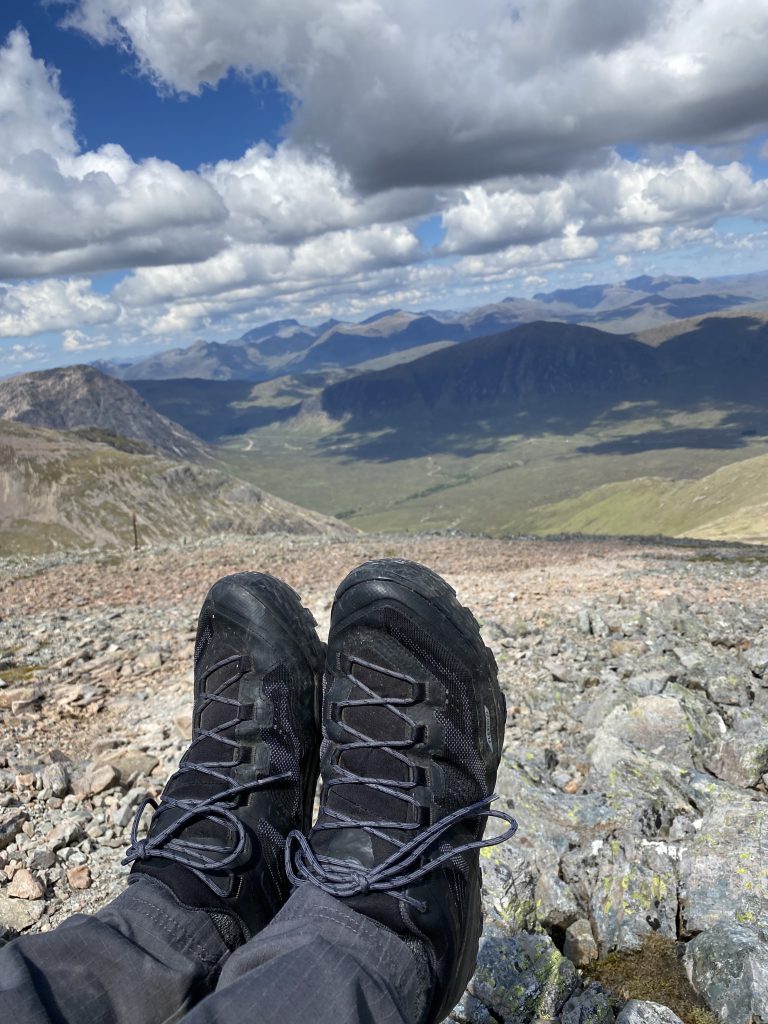
Speaking of that I really must see about getting new boots. All my footwear are in poor shape just now. The soles of my walking boots are falling off and held together with shoe goo. The same stuff filled my wellies for ages and stopping parts of them from falling off. Barely. My outdoor shoes smell, though structurally they are probably in the best shape. Even my trainers are a bit flat at the moment. Poor feet, if only you had something good to walk in and something good to walk on.
Hard frost on the ground today, snow sits on it like icing sugar on a sponge cake. I feel renewed, more energetic than yesterday and certainly more useful than last night which was one of the most useless nights in human history. My headache was so bad I lay on the couch after the girls were asleep and only moved to walk the dog about two hours later. I dozed and watched documentaries on chess, which is probably enough to put anyone to sleep, and retired at the usual time. The walk in the cold night air was invigorating, the painkillers kicked in and I went to bed feeling better than I had all day.
Needless to say, I am a bit hungover today but far better than last night so it’s a win. I might even get a workout in if I have the energy. The hills are encrusted with snow, the ground is hard to walk on, it’s -2˚C currently and set to get not far above that throughout the day. And that’s ok with me. This last frost and winter like conditions are good for renewal and that will make the spring seem all the more worthwhile when it finally comes around. For spring is the time of energy and plans, renewed vigour and renewed life. Things may still be dead at the moment, but soon…
Nature cannot recede. It cannot get worse. It only improves upon itself year after year, and it is us humans, in our attempts to contain nature that block it from doing so and reaching its full potential. Nature cannot recede. It never says no, can never be not bothered. What a wonderful metaphor for the human spirit, and even our day to day lives. Nature can be used like an inspirational quote. Can’t be bothered going to the gym? What would nature do? WWND? No time to relax, rest or sleep. WWND?
The weeds, plants and trees will always try to crack through our pavements. Damp will always find ways to penetrate your home. Moss or clover will always attack your manicured lawn with a fervour bordering on the religious. A green ISIS. Animals will always find a way to survive until they drop down dead of hunger, thirst of exhaustion. How many humans in this western end of Christendom can say that? The spider will always gain access to your garage. The rocks will always fall down the mountain, the waves will always roar up the shore.
What is it about that word ‘wild’ that attracts us? If people were striving for it in the 1800s when parts of the world, and a lot of America, were wild and unclaimed, Scotland itself was probably all but divided up by then, and the free man had nothing except his wildness. The appeal today surely is there are very few of these areas available or that the lifestyle is a fantasy. An idyllic rural life is very appealing when you are in your own centrally heated home where the gas cooker works and the kettle takes minutes.
The reality of the wild would be boiling water for ages or the endless collecting and chopping of wood to heat the home and cook the food. Then doing that again. Living and knowing the seasons, growing rotating, and cultivating. No lie-ins or you might die. Hard fucking work that no one is really accustomed to nowadays, except for the few, or pockets of communities. This extends to our entertainment as well, the appeal of the bad guy in films and books, in games. It’s far more fun to be the villain. The word ‘tame’ as an opposite to ‘wild’ equates to dull as HDT says. Boring, and no one wants to think they lead a boring life, or even admit it.
As each man’s experience of the world differs, each man should experience as much of the world as he possibly can, in order to balance his thoughts, develop empathy and even to set future goals. How can we achieve when we do not know what we need to improve on? How much do we know about ourselves if we’ve never been in a fight, asks Tyler Durden, this can be turned into how well do you know yourself when you are never really challenged? Science can teach us a lot, but how can we really ‘feel’ this, and to feel is to know. No?
A long time ago now, 1996 or 97 maybe, I learned this word empirical, to rely on observation and experience. The Sistine Chapel quote from Good Will Hunting comes to mind also. I feel like a bit of a twat sometimes saying ‘I’ve been there’, or ‘I’ve done that’ or ‘I used to do that’ in normal conversation, why should I? It’s all true. Why would anyone not want to say that? Just because my experiences have changed now to caravan parks and Disneyland doesn’t make it any less worthwhile, or my previous ones from being obsolete. I’ve still been to China. And I know what the Sistine Chapel smells like. And I know how Kazakhstan feels, which is more than a thousand books can teach. But in saying that, I fucking love books and often dream of huge book shops and labyrinth libraries.
‘I want to stay and hear the bluebirds once more’. And don’t we all. What a wonderful way to put it as well. Yes we want to continue to have new and varied and exciting experiences, though maybe less as we age; we want to see our children grow up and have these things for themselves. We’d like to see our own grandchildren and spend time with them. We like to have plans and realise them.
Is hearing the mundane, the everyday things just as important when you reach the end of your life. I hope when I’m 120 and M is 80 that I can still enjoy her company as much as I do now. Imagine as we wait for her younger sister to come round and remind us about our trip to Disneyland or the time I ripped my breeks on that mountain in the snow and how much we laughed. I hope I am aware and awake enough to appreciate the birdsong in the morning just as much, or the taste of my coffee, or the crisp feel of the winter grass under my feet, or the smell of the rain in the air. It is these little things that keep us alive.
Nature is perfect in her details. I felt that this morning when I said to BB to turn off the light in the bathroom and she said its summer. The sunlight was pouring through the little window more than it has for ages and I was not used to seeing it, especially as I was trying my best to keep my eyes closed. But it was nice, nice to see if not nice to be awake on the only chance of a long lie of the week.
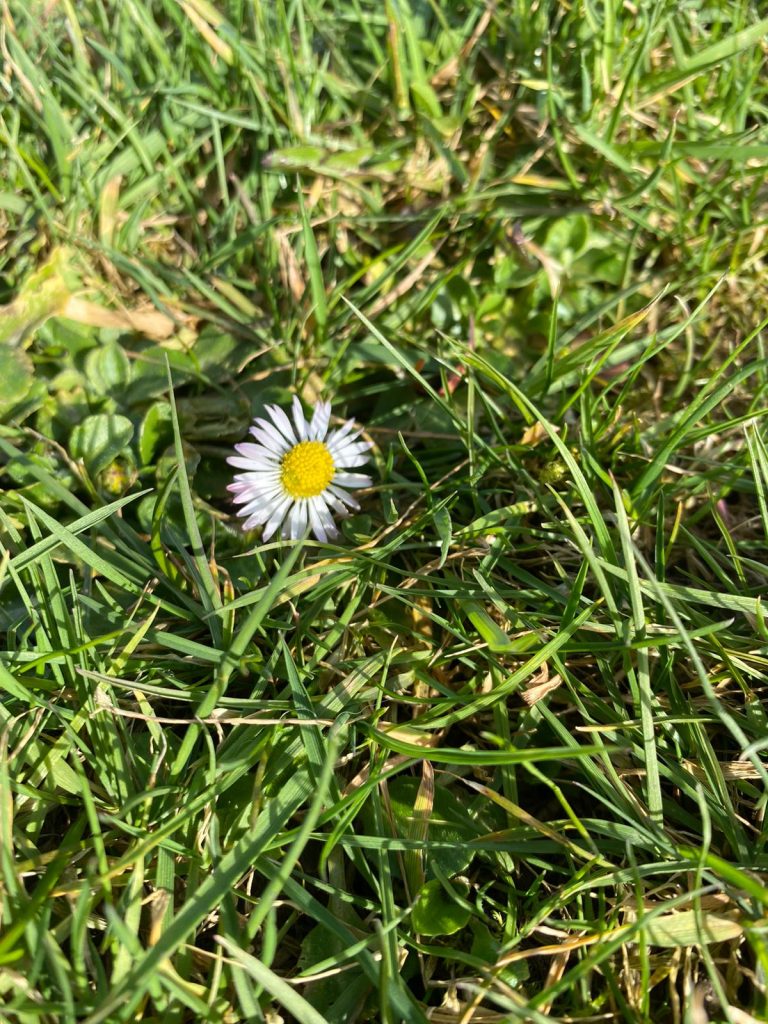
The detail was all over today as well (it’s about 4:30pm), from the tiny glass on the beach to the waves coming over the rocks and soaking those stupid lassies from the knees down. That’s them wet for the day in their jeans and Chuck Taylors. Let’s ignore the signs the tide is giving us and stand here for ages for our Insta photo shoot. The way the girls play with the two Ms at sword fights is incredible, I love it, ganging up on the adults and being ‘Team Kids’ the way it should be, the way nature intended it to be. And everything if full of life as the grass once again grows, daisies and the dandelions won’t be far behind, though next week it is to snow again, deliberate action again, everything perfect, everything intended and nothing rough-hewn from the rock of the earth.
Nice little Scottish analogy from HDT today. I don’t think I’ve ever seen the word ‘macadamised’ used in print before but I suppose it would’ve been a fairly new phenomenon in 1863. I wonder what his take on the civil war would’ve been given the date here and his unconcern for trivialities. A copy of his real journal would no doubt reveal this. He’s right about the bread and circuses of course. Today I’d say more so than in the 1860s. Panem circenses credulous descent.
Triviality is everywhere and the focus on the long game, the bigger picture, is as short as our attention span. I do worry about this. If I can’t even leave my phone alone while watching a movie or reading a book, what chance has humanity got? What of the children for whom this is now the new norm, the example? I see it every day. I see it in my work and in my children. It is not their faults of course, it is the driver of society, a technocratic state in which we are all enslaved, and HDT would no doubt be appalled at the state of the world right now. Our addiction to information every three seconds, but it is more than that, it is the quality of the information too, for 99.99% of it is triviality.
The signs are there, peeking through fence posts and pockets of woodland if you know where to look. At roadsides, at paths, patches in trees and through old stone walls, moss covered and crumbling. The bird song fills the air at certain points of the day, such as now, and makes for a cheerier disposition for anyone. I do not think I would like to live in a place where you could not hear church bells announce the hour or the birdsong is not predominant to the human noise in the morning. The racket we as a species must make to the animal world. It must be appalling.
But these signs of spring are not fully there yet. We are into March now and the ground is still wet and muddy, the sky thick with cloud, the rain complete. Its light, but it’s not bright. There is no sun. We’d need to go high up on the EasyJet to Paris to see it today. Bleak, wet, muddy, so many months of our year look like this. The small things, the reminders we need to look for closely in the hope the weather will eventually change and our moods will be lifted. The buds on the tree, the snowdrops in the woods, the birdsong in the air. The change in temperature? Not likely, bloody freezing the last few days!
And as if by magic here is another passage that corresponds with my earlier writing. “How little appreciation of the beauty of the landscape there is among us.” I couldn’t agree more Henry. And this is even worse in this century than in Thoreau’s’. He wrote that in 1862! Imagine the beautiful vistas he must have seen compared to our modern monstrosities. Land carpet bombed by industry, factories, retail outlets, piss poor housing, even the expensive ones that are not made to last. Will my house be as standing as some of the old ones in this village in 100/200/300 years?
We take up space everywhere. Rip up hedgerows and woodland, build over fields, and divert waterways to suit our needs. Badger sets are meant to be police protected but they are filled in to make way for the human beast. The human fiend, that pretends to care for the natural world but has no interest in it whatsoever. Gone off on a bit of tangent/rant here, forgetting that the original point of the Greek word for the world means cosmos. Beauty or Order. And this in a nutshell is the main tenet of Last Wolf.
In December 2022 I came to the end of a year of directed journal writing. It had become a habit I didn’t want to lose but was unsure of where to take it next. I decided to try and focus my writing away from ‘me’ and force myself to write more about nature and the outdoors. How I was going to do this was a problem, without the content merely recalling my walk that morning or discussing the weather.
Within the last few days of 2022 I came upon the book The Daily Thoreau, a perfect collection of daily quotes from the man behind the phrase Live Deliberately. You can read more about his influence on Last Wolf here. https://lastwolf.co.uk/walden-or-life-in-the-woods/
I began my 2023 journal using these quotes as a springboard for my own thoughts. Sometimes I mention his words specifically, a lot of the time I don’t. Sometimes I don’t understand what he’s on about and others it’s just me rambling. A lot of it mentions the weather and dog walks, but remember, the vast majority was written very early in the morning so probably won’t make much sense anyway. It is presented as un-edited as possible.
Akin to something I was writing about yesterday, there is more magic, or things unknown in the heavens and the earth than we can ever know within our philosophy. We can try. The attainment of knowledge is a golden thing, aspirational for anyone and everyone. The gold is out there to be found, I suppose most people maybe look for it in the wrong places. The classics can’t be beat, but they do go out of style. And they can be built on. Turning the head towards the heavens and recognising that beauty, majesty and scale of the cosmos makes your social questions, whatever they are, seem very insignificant indeed.
There is more revelation in the sun rising up above the trees, or the swan skittering across the water to land perfectly as it intended. The dew on the grass of a morning. The explosions in the night sky, the fact that we are powered by a giant fireball battery that is miles away. Millions of miles away. What knowledge should I carve that is not these kinds of experiences? I notice my footprints in the sand and in the forest floor. I feel the trees. I hear them. We search for sympathy with intelligence, and not necessarily the pursuit of knowledge. Curiosity with a purpose.
This is actually pretty mad to think that the media was the same in 1863 as it is now. I agree that one newspaper a week is enough. I wish I had the time to read the paper but even on a strike day I doubt I’ll have the time. But anyway I don’t want to. Even in reading a localised paper, as no doubt HDT was, you might not recognise your own local area. Stories of crime and the political meanderings that make the national news hardly looks like what is outside our own windows. I’ve had enough of the media, from all sides and of all kinds.
Social media as a source of news is not a source of news. It is opinion and usually the opinion of one person, or I suppose, many if you go to the comments, which can sometimes be more informative, or hilarious. More and more we see accounts that are controlled and the same is true of the print media whose owners and positions dictate what goes in based on what sells. Or their opinion; which is the true nature of media. We tell you what to think based on the biggest dramatic story we can concoct, even if it’s not true. I’ve had too much. I need to get away from it more.
I’ve written about water before. I think I may have a post on it coming soon. Water water everywhere and not a drop to drink said Coleridge, but it is true that water is life, the life blood, and you can see why the search for it on other planets is the obvious thing to do. Or signs of it. A plant droops, you give it water, it lifts itself up confidently to live another day.
Humans are exactly the same, sluggish and bleary eyed, mornings are turned around after that first glass of the day, and many more should be consumed after it. I’d argue it does more for you than a morning coffee does. I try to be well hydrated. Part of the problem I used to have with hangovers was the lack of hydration, now I drink water almost constantly. It’s difficult, especially in company to stop drinking so much and be more polite. But it is healthy no? Why should it feel so weird, especially in the summer? Hydration or dehydration, water is strength, water is life. We are beholden to it to live and it can kill us in an instant. The power of rivers, floods, tides and currents is unfathomable. Unstoppable and the depths of the seas and oceans unimaginable. Terrifying, truly, but necessary.
People bang on about eating a lot; what we need to eat or not eat, when we need to eat etc, but the one thing that does not come up as often is how much growing we do in our sleep. If you’re lying down for 7-8 hours a night, resting, what is your body doing but recuperating or recharging. Processing, making use of all these foods and nutrients or otherwise that we have put in there. It’s like a factory that hasn’t shut down. Its open 24 hours a day and major growth happens when sleeping.
We have actually woken up some mornings convinced that our children are taller than when they went to bed. And if we noticed it, guaranteed it’s a thing other parents have noticed too. Perhaps it’s just more obvious in children who have still to grow, but our bodies don’t stop changing, digesting and processing just because we stopped growing up. Some people gain weight considerably as they age, others, especially older demographics may lose it. Either way to think that we do not change, or that we cannot influence it is wrong, and the majority of this is done when our eyes are closed and it’s so dark we don’t even notice it.
Meaning that one must let the vines grow as they will around ones abode to fully be naturalised? Probably true, though I don’t fancy a tree growing out through the middle of my floor. What I think he might be getting at here is a rewild your soul kind of idea. Let the vines grow where they may, yes be spiritual about it but also natural in an older, ancestral hunter-gatherer sense. Live within your means and with what nature provides. Live in a cave or a shelter made from mud, grass and the trees of the forest. Of course this is nigh on impossible to achieve, though far more plausible in 1849 than now.
A man doing that now would be deemed a hazard, or a charity case, but what if he is the happy one? What if he may prefer living out in the woods in a tent? You take pity on him assuming he has lost his home or his family in some way and you leave meals or gifts for him. He may have chosen this way of life entirely by himself. Where you see sadness and failure, he may see happiness in waking to hear the bird song and falling asleep to the sound if the wind in the trees. Who are we to say what is preferable?
The metaphor here is the rain which must have come down a bit last night as it looked crap outside at 6:30am, but now nearly an hour later it looks no bad; the sun is peeking through the clouds, it’s still. But just as the rain turns the grass green, greener, greenest so does thoughts that affect our moods, and this lightens our prospects for the day. We are what we are. We are what we think, and if that is always ugly unhappy thoughts then we are destined to live in an ugly unhappy world.
Whereas if we can continue to see the beauty in everyday life, from grand vistas, the hugest of views, to the tiny fragments, the specks of dust falling on the glass, we shall be in a much better position both in our minds and out of it. The more art, whether its classical painting, modernist sculpture, highbrow literature or trashy pulp detective novels, we can appreciate, the better. It is not in the eye of the beholder, it is the eye of everyone, maybe they just don’t know it yet, or see it the way they should. My thoughts today will remain positive, appreciative and thankful for the beauty of life itself. What else can I do?
Attitudes to the Outdoors in Western European Painting during the Baroque Period
The Baroque period in the history of art may not be the obvious point to look at when talking about art in the outdoors. But during that time, which lasted roughly through the 17th and into to the first half of the 18th centuries, the attitude towards depicting nature shifted. This allowed for the grander and the epic, names we associate with more natural outdoor artworks. Constable, Freidrich, Turner, giants of the Romantic movement and of works of art depicting the natural world, all were preceded by the Baroque artists and were partly influenced by them.
Before the 17th century, nature in European art was idealised. It was based on a tranquil world of quiet streams that ran through verdant fields, dark trees sat aside the scene like theatre curtains, inviting the viewer in to the serene paradise where the subject just happened to be. And there had to be a subject, nature itself wasn’t the focus of the painting. Usually it was biblical, historical or even mythical yet this was to become increasingly unimportant as the subject became the excuse to paint the landscape with Baroque period artists.
Nicolas Poussin (1594-1665) in his later years painted pictures with titles such as Landscape with Travellers Resting, Landscape with St John on Patmos where St John is relegated to a small figure sitting down. Or take Landscape with Ruins. The ruins are not specific, it is imagined antiquity. It isn’t even an historical place or time period. He had ceased to be the painter of subject and was increasingly interested only in the landscape. The sky is darker and is more realistic. Storms approach, lightning strikes somewhere. Contrast this with the perfect sky of Titian or Annibale Carrachi where nature is beautiful but in order, contained by both reason and God.
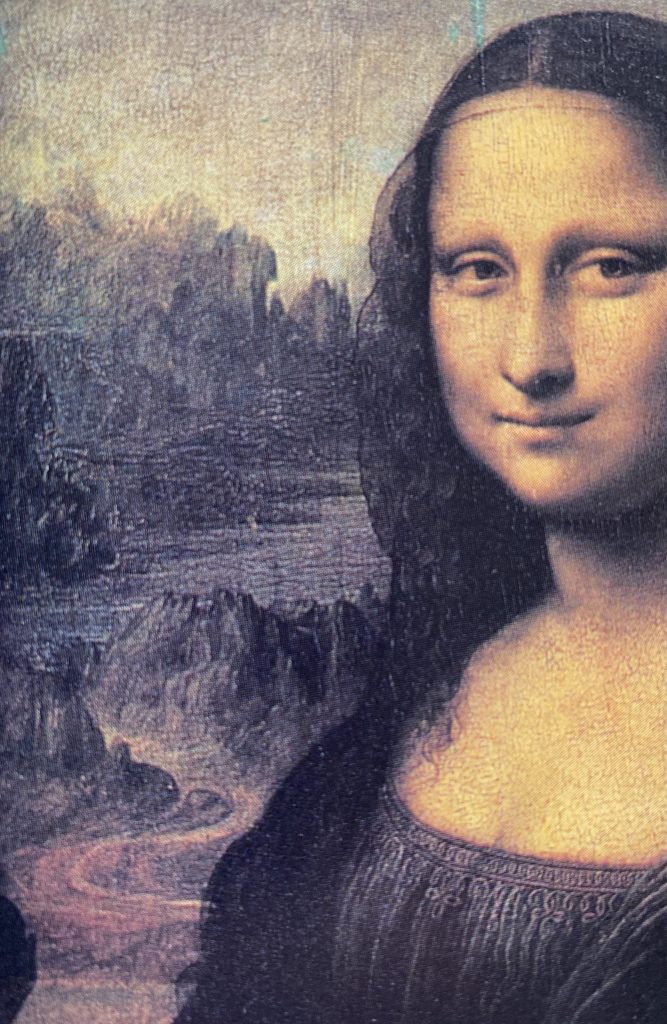
Renaissance artist were known for detail and looking at nature in a far more scientific way. Leonardo famously made incredibly detailed studies of nature, yet think of how he depicts the natural world in his most famous work, the Mona Lisa. Get past the smile and the most intriguing part of the painting is the otherworldly land she inhabits. It looks like it could be our Earth, but it is a puzzling place, roads and bridges go nowhere and the landscape doesn’t even match up. This is a sci-fi land.
Claude Lorrain (1600-1682) runs with ideas similar to Poussin and almost ditches the subject altogether. There is not much in the way of tales to be told, no moral to be reminded of in Claude’s work, and if there is a story in there, it is small, a reminder maybe that we are insignificant to the world of nature regardless of the episode that may be happening. Light becomes his primary concern, and he obsessed over it, detailing the changing moods of the day. Both Constable and Turner were massive fans.
Later, Canaletto (1697- 1768) would develop this mastery of light and detail most famously in his depictions of Venice. He made countless drawings on location, his subject being the city itself, before painting the final master work in his studio. But let us turn attention to something more northern, and Protestant.
Jacob Van Ruisdael (1629- 1682) was most likely the preeminent Dutch landscape artist of the period. And through his work we see major differences between the Flemish and Italian schools of painting of the time. His painting suggest the passing of time, no longer are we stuck in one perfect dramatic moment of unknown time and place. His View of Haarlem from the Dunes at Overveen (1670) shows the omnipresence of God by making the sky take up two thirds of the picture. No angels, no heavenly glory but a meteorologically correct sky, changing before our eyes. Although still concerned with God, Van Ruisdael looks through scientific eyes. He studies, measures, observes, and records, and in doing so, nails the lid of the coffin of art influenced primarily from Rome and Catholic Italian states as solidly as Martin Luther nailed his 95 Theses to the door of Wittenberg cathedral.
Live Deliberately
Barry
Currently listening to Rapture’s Aeons of Devastation, MA/Deicide inspired death metal from Chile.
Not cultivating man entirely, are we talking barbarism here? Or is it barbarianism? Has HDT touched on ideas that Howard would encompass so vividly in the character of Conan? This is the only law of man, the preferable state, and does every/any man still have this within him? Perhaps today’s youth are misguided in the anger they feel, their dramatic reactions, a reaction yes, evolutionarily speaking, to not being able to react in their latent barbarian self. The unknown primal factor no one talks about.
Did Stone Age people worry about such things? Did the Bronze Age? No because they were able to get on as survival was much more important. Man will always feel the need to react, to fight, to be violent, and the trick is to get it under control. We outburst in outrage over insignificant things, traffic, queues, not getting our way, ‘our’ team losing, when really it should be injustice, crime, poverty etc that we rally against. The latent barbarian has been succumbed, lying dormant on the souls of many, too obvious and visible in others.
‘I brag for humanity’. He is leading by example. He is trying here to be a living example to the rest of us, that we can live our lives without frivolity and unnecessary drama, or excessive lifestyles full of fads, expensive items and useless crap. This is a lesson in economy and in bettering oneself by making a situation simpler and our lives less cluttered. Excusing the drama out of our lives would make things much easier, less frantic.
I know this and strive to reduce the drama. Clutter on the other hand is much more difficult for me, as I, and anyone who knows me will tell you. But HDT is a leader, leading out on his own and I am here on my own. Last Wolf is my own. The only other person who has any say in it really is K and I am thankful for that. And I do not see myself as bragging for humanity, just that we are maybe two souls looking for something we know to be true, that we know is there in the outside world, and he had the courage to break away and to live life by his own rules. I am not in that position, yet maybe one day I shall be, but we continue to make small steps even if they mostly seem sideways.
Had a warning a few weeks ago that a new occupant was coming. A shift in the weather, a rise of a few degrees. Snowdrops appeared on the ground tucked away or poking through fence posts. But it went away again, only to be replaced by dark sodden clouds; wetness everywhere, which inevitably turns to muck. Dog’s paws and shoes drag it all over the place. I prefer the crisp hard winter’s morning that barely gets anything on one’s sole, but does a lot for one’s soul.
However this morning, change is in the air once more as I write. Back to writing at the same time every morning so it is easier to track. Light is coming in the window, not enough yet to comfortably write by so the lamp is still required, but it is there. Light. It’s a start. Light and the dog walkers were able to see each other this morning. The ground still muddy and damp is drying though, the birds are singing, I can hear them at the front and the back of the house, and the rabbits were still out in force earlier, breakfasting on the grass that surrounds us. Yes spring is fully on the way now, and the clothing may even get lighter yet too.
This is that harmony, that symbiosis with nature and the world that we used to have as a species but over time and, rapidly within the last 50 years, have forgotten. This goes back to what I was writing about yesterday, about living in season. I actually think we’d be a lot happier and a lot healthier too. We are animal. There is no denying this, yet collectively we seem to think we are above that. That habitats should be bulldozed over to make way for ours. Badger sets destroyed for new housing developments; this is actually a crime, but no one cares and it’s done anyway. Deer and foxes will move on without a second thought, but the principle still holds.
We do not accommodate anything. We are the bullies. We, as a species are totalitarian. A complete dictatorship. As fascist as you like to use an already overly used term. We have gone from hunter gatherer ancestry who venerated the natural world to the destruction of it completely. Nature’s iconoclasts, intent on being the sole survivors of a parched and scorched earth. Exhausted and resource less, as we think we thrive and survive.
We don’t prepare for winter like we used to. Homes are not built that way. Society does not run that way. I remember the pantry at the farm, massive and stocked up with the most amount of food I’ve ever seen. Multiple bags of hula hoops, a chest freezer the size of a couch, no doubt stuffed with the tastiest cuts. As they should be.
There is something to be said for living seasonably. Strawberries taste all the better in the summer when you haven’t spent all winter eating shitty imported ones form Spain or Morocco. Winter vegetables, turnip, parsnip, carrots, a hint of spice for the exotic that is the taste of winter. Mulled wine and port, figs and nuts. Things we used to store like squirrels. Now of course we do not need to do that. During extremes of weather the shops are only closed for a day or two, if at all. You might not get bread for the Warburton’s delivery but you can probably get locally produced rolls. And people panic buy because they can’t get stuff instantly, like at the pandemic beginning. Maybe the lesson in preparing for winter like our ancestors did is a good one. It’s not that long ago that we used to have to do this after all.
Place is not enough though. If someone were to swap places with me, they would no more see what it was like for me than think like me. They would be an observant, not a participant, for only through doing my actions in my place would that be true. And you would still be no closer to being me. Though, for arguments sake, let’s just say it was feasible, like an 80s movie, Big or Vice Versa, and no doubt many others where people swap lives. Trading Places?
What would another man see and feel if he was put directly into my place right now? What would I experience if I was put into someone else’s? Would I want to? Probably not. Would I like the body of someone younger? Maybe. But then my strength levels are pretty good right now if not my actual physical ability. Might be nice to not be sore but then who’s to say that the 24 year old has any less pain just a better way of hiding it. I certainly wouldn’t want their mind. A little bit faster, a little bit bendier, by that I mean flexibility, but these are things I can still pursue anyway. And in my shoes they would see me, busy and procrastinating at the same time. Dedicated and hiding both actually and metaphorically. Still, not swapping.
In some ways I am writing less than I have done since I started to pursue this properly. In some ways I am writing more. For instance, the journal for 2022 was in two sections, morning and evening. This was good and actually suited my lifestyle well. This one is larger and a page a day, usually morning. It adds up to more than both 2022 entries. I may not be doing a page in the A4 book every day, as I have done previously, but I am doing every other day. Usually.
The December Charge journal is random though still used. And we have that workout journal, and the daily one. Not to mention the ever present pocket notebook. That’s seven books at any one time. The girl’s book is fairly new, and I am enjoying exploring its themes so far. This is a lifelong one, as it is intended for them throughout my life. A guide, interspersed with memories and snippets of them as children. This is possibly my favourite way of writing, directly to them. At least I know I have an audience. Who else but the handful of people who read my blog really care? Would I care anyway, or like NH said, am I just going to do it regardless? That’s probably about right anyway.
If our experiences shape us, then what are the things that I have experienced that made me the man I am today? A lifetime of feeling uncomfortable and self-conscious has led me to be not as confident as I may appear to be. This is most likely the driver for the fitness regime I have, and the bjj, and the fact that I know this is almost my last chance at this given my rapidly advancing age.
What is it that makes me look for niche interests? Although heavy metal is global and has sold millions of records, it is a niche, and my interests still lie on the boundaries of it. Maybe not the deep underground anymore but certainly the extreme fringes. Even when I first started doing bjj there was only two places in Edinburgh doing it. Now there are waiting lists. That is mental. Maybe this comes from an early exposure to horror movies and its underground ideas. That there is more than what everyone else is watching. More to life than the obvious big budget shit. Give me more and make it real!
Walls. Walls keep out the cold and stop the wind. But only if supported by a roof. Walls are built to defend from elements and enemies, to keep my property mine, and not for anyone to just wander in. They defend me, but also I must defend them, so which in effect is more liberating. If a wall is a shelter, or is it in fact a barricade against the outdoors, keeping us within its four barriers, neat and compact like we are in The Cube. I refer of course to the brilliant film and not the bullshit game show.
And what of its other meaning, that of a border. The Berlin Wall, Trumps famed wall to keep out the invading Mexicans, the Great Wall. These are territorial, significant that we use the same word for our houses. What is the difference between these and our own? They block out the outside world, they must be maintained, maybe not by garrisons and arms, but by paint, plaster and wall paper. They inhibit us from a life lived outside and they stop others from visiting who are not invited. What I would be doing right now if I didn’t have just one of these four walls? Well it would be entirely different from the relative warmth and comfort that I am in. This page would be wet and the tape player wouldn’t be working for a start.
There is no remedy to love but to love more. Seek out new love, anyone can be your brand new love sang Lou Barlow, and of course it can be made better too. Certainly true on my part, and when you think back to what you thought love might have been previously it pales in comparison to the love we carry now. Our love, me and K I’m talking about here, was enhanced by ten million when M was born and it was already pretty fucking massive. An ironclad love, multiplied by ten million by the arrival of her and then another ten million when B was born a year and a bit later.
Conquer the failed love by creating more, different, better, and neither of us had felt anything like it, and that is still true to this day. And still will be in five years, ten years, twenty etc. Maybe I should check in on that every five years. Every multiple of five on Valentine’s Day, my journal entry will be a love-o-meter. A state of the love address. A where are we now piece. Just need to remember!
And I’ve always thought of it as a rather wasted economy. Not a fan. I mean sometimes its ok, going out for a steak for example. That last time at Scotts was good, several whisky cocktails in too, but for the most part, it is a waste of money and a waste of my time. I would much rather refuel at 4:30 with the girls and spend the time as I would usually, in the gym or in the garage or writing in here. Or somewhere else. I am as happy with a bowl of tinned soup or a frozen lasagne as I am with a £30 meal out.
But it’s ok now and then though, and I’d much rather eat a steak than some shite ‘fill me up now’ food like Frankie and Bennies which cost the same. All or nothing. A detriment to my economy, fucks up my month and generally puts me out of sync, financially, gastronomically and physically as I feel I’m always missing something. Put on the back foot by something I didn’t want in the first place. No I’m staying in and not half going on about it here, but don’t blame me, blame HDT, he brought it up and I am at the very mercy of his own journals and meandering thoughts. Maybe get a morning to myself tomorrow and catch up on some of the big stuff. Haven’t written in here on a plane before either.
I awake, and it takes me a while to get going. If the alarm goes off and it’s a school day I am up almost instantly and brushing my teeth within about thirty seconds of my eyes opening. The morning runs like clockwork. If it happens to be a holiday or a weekend, I take ages to wake up. I like to lie and doze. I grumble and moan at the girls who get up too early. I am awake only when I enter the shower, or more likely half way through it. I am surly and short of temper.
Why then am I not like this when I am awakened so sharply by my alarm? Is 5:45 perhaps a ‘better’ time to get up? Do I perform at my best when my life is structured and organised almost to the minute? I think it is. I do my best work in the morning, up to around 11:30. If I could get those hours of quality writing in a day I’d be onto a winner and would have a book written no problem. Real life wins though and I always have to go to work. Boo! But at least I enjoy it, getting up is never a struggle; there is never dread. I’m writing this balanced on a bed in a Disneyland hotel, which is why it is so wonky and I can barely see anymore.
Interesting that HDT mentions the amelioration of the climate here, in 1852! Snow shoes left unused for generations in old garrets. Dusty and forgotten. I like the use of the word garret too as I always preferred it to loft or attic. But he’s talking here about climate change. In 1852! Quite incredible that it is recognisable this long ago, and possibly longer. I’ll need to share this with DC.
I wonder when people first started noticing this and recording it. Would make an interesting article. It’s an unfortunate problem that climate denial is a thing. That’s a lot of horseshit to me, climate change is critical. A lot of people will deny the science, but you cannot deny what you can see with your own eyes. Some of it isn’t even science, its geography. I’ve seen a change in weather in my lifetime, how much more in my children’s? No, it’s serious and I shall have to put the history of climate change into my other notebook.
Choosing not to have a mat is a lesson in economy right? A lesson I wish I could adhere to. Or do I? I mean, maybe its ok as a young man, or when camping or even when rich. No doubt HDT still had tons of his own shit back at the family mansion when he went off to live at Walden Pond. We’re probably taking more stuff for a weekend away than HDT had in his entire hut. But then he didn’t have two under five year olds did he?
I think I’ve been here before, discussing the merits of minimal living while not practising it in the slightest myself. A variety of costume changes per day is my style, like Elton John. Dog walking clothes, school clothes, workout or gym clothes; all different. At least I was able to get rid of the school teacher clothes and just amalgamated it into the Barry wardrobe, which is much more efficient. Which is another reminder to maybe ditch that shit once and for all on Vinted. I’m not likely to go for a management position any time soon! And all that stuff may or may not fit anyway. Two quid on a shirt adds up. Yes minimal living is desirable, but not practical and I like my life. I think we have it pretty good just now, despite being skint, but then I’ve always been skint. Balance, now that’s the key, and that is good.
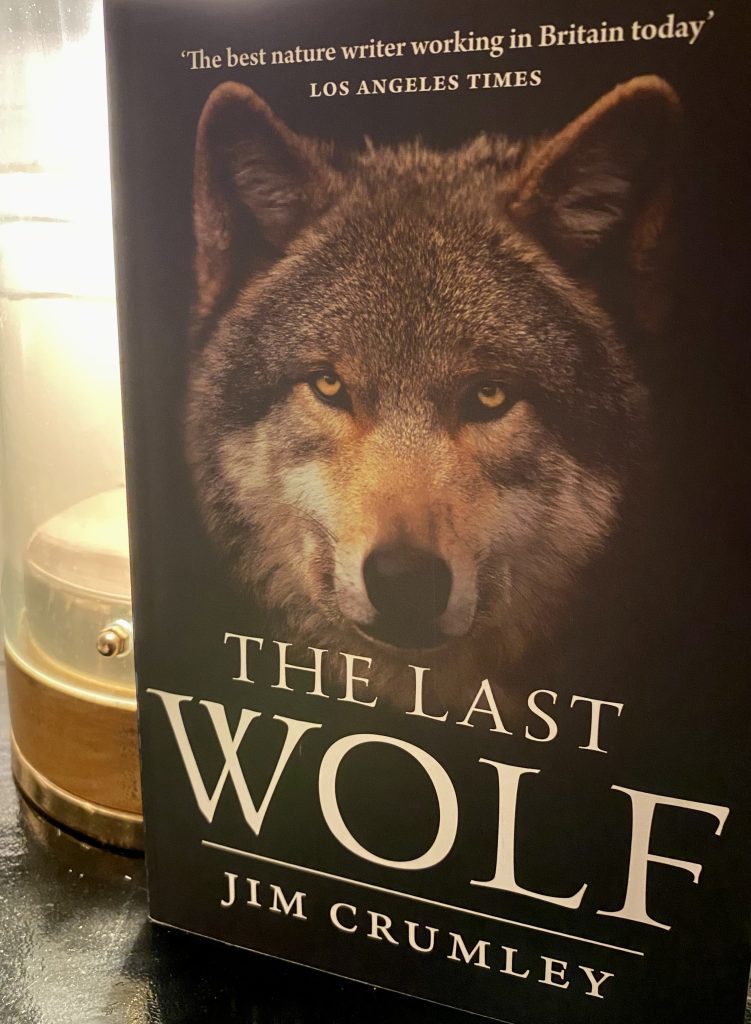
This one seems obvious right. But I waited a long time to include this book because I like it so much, and its influence is clear. I can make it clearer still, Jim Crumley is the absolute man. He’s so good, The Last Wolf is not even my favourite book of his. That dubious honour goes to Nature’s Architect, his 2015 book on beavers, but it’s The Last Wolf that has given me the name for my website, my clothing and ultimately brought together a lot of my thoughts and ideas under one name.
First published in 2010, I didn’t get my hands on it until the paperback edition of 2016. Crumley is originally from Dundee. It is perhaps odd that I did not discover his work earlier, and odder that I arrived via a long history of mostly American nature writers. From Thoreau and Muir, to Leopold and Peacock and finally to Scottish writers; Seton Gordon, Nan Shepherd, and Jim Crumley. It took the giants of American nature writing to lead me to a guy who worked as a journalist at a paper based about 25 miles away from where I grew up. He still writes a Courier column. I’m glad he came back to it, and I absolutely put him up there with these greats.
The popular legend, well one of them anyway, says that the last wolf in Scotland was killed around the River Findhorn in 1743 by a six foot seven stalker called MacQueen armed with only a dirk and his bare hands. This was a huge black beast that had killed two children, and MacQueen took its head. This is the story I first heard, and the one that inspired me to start thinking about the last of a species within a land and whether or not it knew there was no others. The story, I think is particularly poignant to Scotland, partly due to what we now know happens to an eco-system without large predators, but also partly due to the political situation around Scotland at the time and the disaster that was to come a few years later, which was nothing short of a subjugation of an entire culture and way of life.
Of course the last wolf story is all bullshit, and called out by Crumley as early as page four. No this story is a Victorian invention, from a populous drunk on the stories of Sir Walter Scott and the thought of a tartan clad queen traipsing around the Cairngorms. Crumley pulls apart the myths surrounding the last wolf with detail. His background is journalism so you know the research is thorough, yet also with ease, because most of it is ridiculous anyway. Wolves in Scotland were neither black, nor huge. Also, speaking of size, isn’t it interesting that MacQueen is exactly the same height as William Wallace was reported to be? Fishy.
Crumley travels Scotland looking for wolf related stories and evidence from Waternish on Skye, to Strathnaver in Sutherland, south to the Findhorn valley and across Rannoch moor to Killiekrankie investigating claims and legends. This is contrasted with the story of wolves throughout the northern hemisphere, and crucially the world changing wolf reintroduction at Yellowstone. The Last Wolf is both Scottish and international.
But the most important part of it is not the fun stuff of debunking the Brothers Grimm nonsense that goes along with any talk of wolves, but what we can do about it, what we need to overcome as a society in order for these animals to eventually be ‘allowed’ back into Scotland. There is no land bridge here, they are never going to be able to just walk back as they have in parts of Scandinavia. But Crumley is confident that they will be here, and within his lifetime too.
And despite all that this book (and its author) have done for me, this book does feel frustrating. This is the nature of books like The Last Wolf, and others that deal with subjects that are long extinct; that things aren’t moving fast enough, or being taken seriously enough to do anything about it, when the benefits seem so obvious. Powers that be need to read this book, and not just people who are already sold on the idea of species reintroduction.
The Last Wolf by Jim Crumley has provided me with more than a name. It is central to the existence of Last Wolf and its influence can never be quantified. It takes its rightful place among The Sacred Texts of Last Wolf.
When driving home from work, on days when I don’t pick up my daughters, I come down the dual carriageway that runs through Livingston. On a spring or summers afternoon, or indeed any clear one, you get a good expansive view of this side of the Pentlands and the land before it. It’s often remarkable to me how much of it there is, how green it is, and also how difficult it is for me to pinpoint where anything is. Surely I know these woods, fields and hills. And ok, I only really have a few seconds to take it all in as I am concentrating on driving, but it is one of my favourite parts of the journey.
What I must be looking at is the western end of Selm Muir, out across the fields where the clay pigeon road ends and eventually reaches the waterfalls. There is no stopping point really on this road for a proper view, it would be too dangerous, but I often see it with the need to explore it more. It is also striking how high up it is and the road into Livi really does go into the Almond ‘Valley’ most evidently here. Probably the reason why nana’s front door is an absolute sun trap and ours a total wind tunnel. It’s all a question of elevation, and more than a touch of nature where you might not think to look.
Go towards the sun and your shadow will fall behind you. A metaphor for progress perhaps. Timely, for what progress have I made a month and a week into 2023, and is the shadow behind or in front. Pages for another journal perhaps, but let’s just say January went well. Then I fell down a mountain and felt sore for a bit. Recovered more or less now and its back to heavy weights which, weirdly always makes me feel better.
This morning there is a wind blowing, I can hear it sitting in here and it was a chill wind when I was out earlier. Dry though, and the cloud cover made it dark, darker than usual for those grey clouds even now are covering the wanting to be blue sky. The clouds are moving swiftly and I can just see a crack of pink and orange off over the hills. To be walking into that of a morning would be fine indeed and perhaps I shall be able to give myself that pleasure one day next week. Next year of course it will all change with M at school so these random mornings will cease to be during holidays. Make the most of it now. There’s a case for school being like that from someone I’m sure. In the meantime let’s follow the sun as much as we can.
How is my relationship with the cold? Cold I kind of like. Wind chill though is fucking horrible and a different kettle of fish altogether. Cold I can deal with and almost enjoy to a certain degree. It’s nice coming in from the cold, feeling that feeling of the feeling returning to your fingers. Drinking warm coffee to heat up your innards. Only on mountains have I been so cold I can’t do up buttons, zips can be a struggle, and even putting on gloves is difficult.
It’s important not to panic of course in these situations and maybe this is one thing jiu-jitsu gives me is the ability not to panic in extreme situations. How else did I get myself out of that jam last weekend? No panic there after the initial shock had calmed down. Could I have returned to the bit I should’ve been at? Would it have made a difference? Not likely. Cold is cold but wind is horrible. -20˚C in Kazakhstan was fine, bearable and not a breath of wind firing in from the sea there; the sea being about 1,000 miles away. Here in Scotland, ‘it’s fucking Baltic’, is a popular phrase for a reason. But when it lifts, and when it feels still, it is all the more beautiful for it. Plus it helps keep the midges away.
How much desire is there in me to build a new or alternative lifestyle? One where I rely on ‘me’ more. That would mean in terms of sourcing and producing, making and creating. The learning curve surely would be steep due to necessity. Would I really want to put my family through all that upheaval? Would I really want to do that myself, give up all this, and what we’ve worked hard to give these two? Is it worth the risk, the sacrifice? And who would we be proving that point to?
I’d like to see if we could, say live in a caravan for a year while a house is being built. I think I’d quite like the challenge of limited living like that. It would force organisation and minimalism. Everything would need to go into storage. Then after that maybe we wouldn’t want to go back and a more off grid life would be preferable. Pipe dreams, or maybe not even dreams at all. The point is yes, I am comfortable, and so is my family, and that is what I want. I would like to live surrounded by trees but I don’t want us living in a freezing shed. That is what I’m not willing to risk. This place is too unforgiving for that.
I can’t write about nature with any lyricism at all; no great metaphors or similes, no amazing analogies or descriptions. I just spent ten minutes, maybe fifteen, sitting at the kitchen table with a cup of coffee looking out to the garden. I saw a lot of birds, the little yellow tits are my favourite, but the bullfinch has come back again, which is great to see. As has the robins, who never really leave. They seem to be there year round.
I was struck there by the variety of green. The big tree is bare obviously and the others next to it but the amount of green is really quite astounding. The variety of shades is amazing, even just in the grass itself, which is quite poor. The lightness of the conifers contrast the darkness of the holly bush on the other side. The grey-green of the bush next to them stands out against the grass as its healthiest, which is at the point right in front of the bush. If there is any metaphor to be made maybe it is that it reflects society. Here is one colour in my garden, and there is so many different kinds of it; maybe we should be looking more at the nuances and celebrating them.
Whilst I don’t agree that a mention of the weather needs to make it into every journal entry, I do believe it affects our character and moods we’re in, at that particular moment. So on with the weather. A dry and calm day, cloudy, yet mild for the time of year, colourless yet spring is trying to spring forth. The signs are there, lighter mornings, longer evenings (just), but it makes a difference. It will be interesting to notice any change when we head to Paris next weekend and of course changes when we come back.
There is a big sun on the weather report for there on the week ahead so fingers crossed its ok. If the sun is shining at Disneyland what happier place would there be in the world for children of my twos age. Looking towards the rolling tundra of Norway would be my choice, or the deep Cascadian forest but hey, Disneyland is no bad. It’s definitely warmer today too. And we shall try and contain our excitement for what promises to be the busiest yet longest week in human history as we try to fit everything in to normality and the unreality that it is going to bring. Can’t wait!
This is the first morning for ages that I’ve left the house and not been all hunched over, tucked in, shivering and dying to get back. Or wet. Today feels like spring. There is no chill in the air and that was more of a breeze than a wind. No rain, no snow, no ice. The ground was dry, even the mud on the grass wasn’t too bad. The snowdrops peeked out on the mountainside the other day, is this really the start of spring?
Imbolc was yesterday, or the day before, can’t remember, but the moon was out large and yellow this morning. It is at these times of year, solstices etc. that we feel closest to our ancestors I think. Ancestor worship has never been a large part of my life though it is interesting. What is it that stops me going full on pagan? ‘A heathen conceivably but one would hope not an unenlightened one’ to quote Lord Summerisle. But these times, Imbolc included, really strikes at something ancient, something that was always there and there is an importance in the air. A change for sure. They felt it, we should feel it too. But we need reminded of it through our thumbs and digital screens.
Well if there was ever a sign to read the Vedas then that was surely it. I must get a copy if the Bhagavad Gita. Long has this been on a distant reading list in my mind and I keep putting it off for this reason; I didn’t think I’d like it. Yet it has influenced so many people I follow, or read, or admire in a way, so I can’t ignore that original text anymore. Last year it was the Stoics every day. Epictetus, Marcus Aurelius, Seneca, made up the mornings and evening of 2022, hereafter known as the year of the Stoic.
HDT calls the Bhagavad stupendous and cosmogonal which makes our modern world and its literature seem puny and trivial. Wow! The pure Walden water is mingled with the sacred water of the Ganges. Maybe my head is a bit in space at the moment, deep space. I am not interested in looking down upon earth from the moon, but from nebula, galaxies, light years away, the golden green glow of a new born star, the deadly deep dark of a dying one. Places we can never know, only imagine and theorise as we collect our water next to the seer of the Brahmin and fellow reader of the Vedas.
The gospel according to the moment is a fine idea. He who lives not in the past but in the hearing of every church bell or every cock crow is truly blessed. Now I suppose we can turn that into a social media metaphor too, for I have been more or less absent from it for a week now. And it feels good, particularly avoiding Instagram and Facebook. Ebay and Vinted have kind of replaced them as I’ve been selling a lot of items but that’s ok. Time consuming but ok. I know I’ll have to get back to using it and I do have some new content to post, but it is a bullshit world, full of fakery.
I’ve written that many times, and will again, it’s like I need to coax myself into doing it. Goad myself, trick myself even into thinking it’s doing any good. I’ll do one tonight, maybe the one of the mountain and the moon and I’ll do a t-shirts one tomorrow. The problem is that it takes you out of the moment. You’re no longer living in that moment if you’re distracted by someone’s deliberate attempt to capture your attention. Surely our work should be placed in a better environment than that? Look at me it says, choose me over all else and I’ll bend over backwards to get you to do it. For five seconds. Shite.
In December 2022 I came to the end of a year of directed journal writing. It had become a habit I didn’t want to lose but was unsure of where to take it next. I decided to try and focus my writing away from ‘me’ and force myself to write more about nature and the outdoors. How I was going to do this was a problem, without the content merely recalling my walk that morning or discussing the weather.
Within the last few days of 2022 I came upon the book The Daily Thoreau, a perfect collection of daily quotes from the man behind the phrase Live Deliberately. You can read more about his influence on Last Wolf here. https://lastwolf.co.uk/walden-or-life-in-the-woods/
I began my 2023 journal using these quotes as a springboard for my own thoughts. Sometimes I mention his words specifically, a lot of the time I don’t. Sometimes I don’t understand what he’s on about and others it’s just me rambling. A lot of it mentions the weather and dog walks, but remember, the vast majority was written very early in the morning so probably won’t make much sense anyway. It is presented as un-edited as possible.
Ah the last day of January, and my thaw came yesterday in the form of a much needed rest. I am lucky to have today off and intend to rest as soon as I get my jobs done. My bones hurt, my body was sore, arms, shoulders, back, legs and knees, and a bath last night made me feel amazing. For three minutes. Canned BJJ for this week until my arm heals properly but everything else needs it as well. Needing a break; recuperation. January has been full on.
February will be too, so this week, we shall do our de-load workouts and take it easy before everything starts again and the madness of a holiday takes over. Can’t wait for that. Less of a thaw maybe, as I’ve felt I’ve nailed January pretty well, as best I could anyway and taking a little time off is something I need to be better at. It’s just as important. It has by no means been a slack winter, December was similar and I intend to keep the pressure going. However, I do recognise the need for rest and today, and this week, will be focussed on that. As January leaves the strength, the desire and the will returns.
Am I in harmony with the seasons? My clothes don’t change too drastically; shorts instead of breeks maybe. The wellies get used less in the summer months, though they still get a lot of use in August. I don’t wish the seasons away. I like to enjoy them for the moment they’re in. Take advantage of the dark nights for sleep and cosiness, the long summer ones being used for long walks, ideas and activity. The renewal that comes from spring, the plans for outdoor fitness, runs and exercise. The woodland photos of autumn, jackets back on as we prepare for winter once more.
All are great. All have their own nuances and ups and downs. Summer is less organised, less streamlined, whereas winter runs like clockwork, usually, until the snow and ice hit properly. And I prefer winter clothing. I like hats and jackets and gloves. Multi-layers are much more comfortable and I like walking in the dark nights when there are less people around, though we don’t go as far. We see the stars and the moon better, the dark is appealing and scary and exhilarating and almost refreshing. Of course, as I’ve mentioned before, it’s never truly dark here, and will be worse next year so better make the most of it while we can.
True, the high flying crow reveals the tone of the weather even before we step outside. Seeing birds in the wind, or even how animals behave, can give us clues to what it is like outside. I was lucky to see so much wildlife the other day. Several ptarmigan, one perched on an icy rock atop the precipice before flying off. A big mountain hare as white as the snow it was hiding in. A herd of large deer and a couple of other ptarmigan on the descent. Normally the dog chases anything off, or they smell him coming a mile away and clear out.
I knew that because those deer had made it down that way then I could, carefully, them on four legs, me on four limbs and rear end for safety. But how many times do we look out the kitchen window and see a bird battling to the wind, or soaring in a direction it intended not to go in. ‘Oooft, it’s a windy one’ I say and put an extra layer on, or tuck in t-shirts before going outside. What the hare and the ptarmigan told me I’d need to figure out but they both looked resplendent in their winter coats, so maybe that’s just a reminder to wear mine.
When is a walk a failure? That is a funny question and I can’t think of anytime a walk itself could be considered so. I have had to turn back on mountains, but when this happens I see it as less of a failure and more of a reconnaissance trip. The mountains will always be there. Do I wish I’d climbed more in my early 30s? Sure, of course. But I don’t regret it. The conquering of the mountain was maybe a failure, but the walk, the hike, the adventure, the lesson, certainly was not.
A walk will often conjure new thoughts and ideas, even on very familiar ground, but equally, often it won’t, and this is hardly a failure either. For experience never can be, and there is an argument to be made that any experience outdoors surpasses an equivalent amount of time indoors. Outside our senses are fired, we are uncomfortable (in this weather anyway), instantly more active, and more in touch with our older primal selves. This is an area I would be interested in tackling more; how does one realise our inner ancestor, our dormant caveman? Is it possible? Is it easy? I don’t know. Maybe a walk is just the thing to bring that idea out.
Does the flower look better in the nosegay than in the meadow where we had to wet our feet to get to it? It’s a wonderful analogy from HDT and a different way of thinking about what is happening here. We are nearly a month in, me and my journal and I had hoped to have more nature writing, which I do, with the possibility to turn it into larger pieces. This part hasn’t happened. Maybe only one or two could be considered thusly. But that’s not a bad thing it itself and if the journal turns out to be more about me and my thoughts and how they are ‘living deliberately’ then that is ok.
Maybe they are meant to be journal entries only. They belong in here. Short, and not deliberately or unnaturally extended. A journal is a collection of unedited moments after all is it not, and therefore work better as the flowers in the meadow. This is the period of me getting my feet wet.
I noticed my eyesight going last year at 44. I would struggle to see some small print, pushing things away and bringing them forward to try to read, say, the medicine bottle. Even when wood burning I’d notice it’s easier with my glasses on. When I asked the optician about this he said “That’s old age mate”, and he was right. It’s not gotten any worse but it’s not gotten any better. It’s not going to and I need to accept that. And I ended up having to get glasses. Extra glasses! Glasses to put on top of my contact lenses. This sounds mental but it’s true, and it does work, even with my £1 Asda glasses.
But, and this is a big but, I don’t feel older. I feel better. I’m moving more, stronger, which suits me now at this age. Most men get fatter as they get older not stronger. Bigger yes but weaker. I’m not looking at competing under 70kg anymore which after weighing myself this morning I’m 87.5kg and that’s after two sessions of bjj this week and feeling pretty dehydrated. So my old maxim of ‘I’m not getting older, I’m getting better’ still reigns true and I hope I can continue this. There is no reason why I can’t do jiu-jitsu at 70, 80 or 90 and if I want to, I will. Maybe I’ll move onto something else by 90.
Yes the trees are being cut rapidly. Here there are little woods, patches of trees dotted around. There are no real forests. Parks, national or private but no random unmanaged forests. We even have forests that have no trees. Can you believe that? Deer forests, ironically called because there is not a single tree in it as the deer eat them all. The older I get the more I want to live around trees. Have I lost the lure of the sea? I lived next to it for half my life but I’ve proved I don’t ‘need’ to be near it, and though I do miss it, I don’t think it’s something I yearn for. And anyway I can always go to Anster for a night walk along the shore if I want.
Now I have a yearning to live with trees, to live among them. To use them and live with them, watching them, observing trees and their habits. Do I even want to work with them? That I’m not sure of as it would probably involve cutting them down at some point. But a cabin in a clearing surrounded by trees sounds like heaven to me right now. I wonder where this has come from and if it’s a by-product of not being particularly active in the woods of late. No games, no walks, no camping. Maybe it will pass, maybe it won’t. And maybe we’ll move to Tomich after all.
What is a winter without snow and ice at this latitude? I tend to agree. It feels abnormal when the snow doesn’t arrive and not like winter at all. There is little left but mud and wet and dead leaves congealed together like old spinach at the bottom of the packet, all wet and useless. But this morning was fine and now, a Tuesday morning, a bit later than usual, it is light. Is the winter gone or will we get more snow and icy winds into February? It’s not unheard of and probably likely. We’ve had snow and ice as late as the end of March.
This morning the ground was soft and muddy in places though the grass is fine and clean in others. The dog isn’t too bad, being a good sign of how muddy it is, and he’s sitting at my feet now after two walks this morning. The rain has not come though the dampness has and it’s not churned up so much of the mud. Bad news from the estate as one of his pals had to put down on Sunday. He’s been struggling for a while and just because it’s the best thing to do, doesn’t make it any less heart breaking. He was a good boy, and a reminder for me of everyone’s mortality.
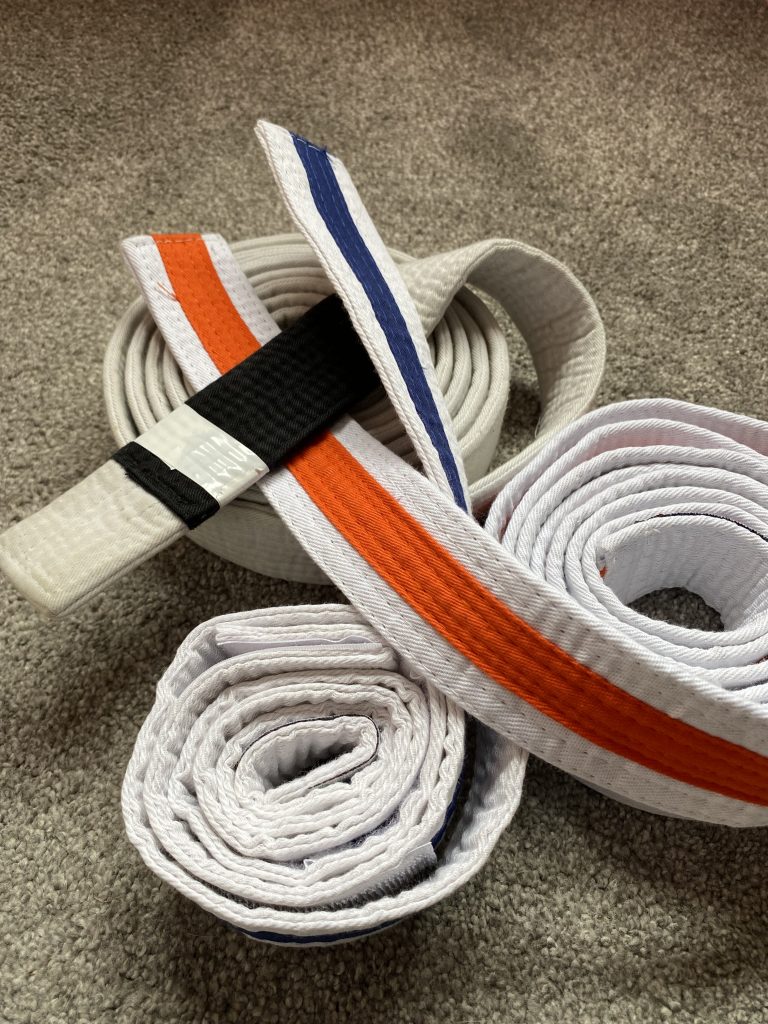
This resonates with how industrious our house is these days, how regimented our timings are for getting the girls to nursery, making tea etc. And also how busy the weekends are. The amount of stuff we get done is sometimes incredible. Two weeks ago we had a mattress on the floor. Now we have a brand new bedroom but I can’t let this week go by without mentioning M’s orange belt grading.
After the meltdown she had before at the last one, I knew she would do it this time, but it was how she did it. She asked to go on the mats early and sit with the others she didn’t know. But the best bit was when she sat down, turned around at me and gave me a knowing wink. An ‘I got this dad’ look, full of confidence, and she was amazing. Listening, focused, commended by Mr K for her moves and for paying attention. I was near brought to tears. Pride? Absolutely. I love that these two do Taekwondo, and I hope they continue it. I won’t push them if they don’t want to one day but they both have the ability and the interest to be very good at it. And of course going to Tony Macaroni’s afterwards helped. Notice how I write about this rather than the Heilung show!
And connected to the light is the silence. We used to get that on the farm road at night and sometimes even in the day for pockets of time. Houses will surround it soon and the silence will disappear. There is always the odd idiot in a high powered car or a motorbike on the A road but mostly the traffic noise is minimal especially late at night. We can here the freight trains though. With more homes comes more noise. Not music for no one seems to listen to music anymore let alone play instruments.
Or maybe the homes may be silent. Lost in an inner blue haze of devices or the green hue if the football is on. Doors slam, cars start, garages are opened, kids kick balls or bounce or trampolines. Neighbours talk or couples quarrel. People stand outside their front door and smoke honking weed for everyone else to smell. No the quiet is gone. The sound of nothing. The sound of the wind in the trees and bushes, the sound of the fields, small fish appear in the pond and disappear. A badger moves, a fox silent, a rabbit tears across a field. The sound of humanity overtakes everything.
Not here. The night is blacker than black here. As black as priest’s socks, the only true black. All others are just very very very dark blue. But the night sky at this time of year holds little blue. Is it a northern thing? Because we are in the central belt we forget that compared to the rest of the UK, even Europe, we are quite far north. Light pollution here is rubbish and about to become worse when this scheme next to us illuminates my night sky even more. Gone are my dark walks along the farm path gazing at the stars, for both sides of the road will now be lit by homes. The old path up to the main road will eventually be tarmacked itself, instead of the dusty clay, full of holes path it currently is.
Or was, as that way has been blocked for a few months now. We are losing our night sky. People never have a nice thing to say about North Korea, but if you can say one thing it is that they’ll have a better view of the night sky than most countries, and their addition to the light pollution of the world is virtually zero. Bring on the stars.
Dual purpose. The research, the practice, the everyday chore then becomes the novel. Eventually the book is written, eventually the work gets done. What is this for then? Am I hoping for blog post inspiration from this? Partly. And hoping to engage with nature writing in a small way, thinking about being outdoors even if not being in it. For the world is busy just now. In a creative way, one journal, once a day if I’m lucky and get a page complete before ‘Daaaaad’ is shouted somewhere and someone else is crying. It’s already happened three times in half a page.
But yesterday I picked up the creative writing book and wrote in it for the first time since the end of November. I wrote a story, one page, fast. It just came out but could be developed into a longer one for sure. The influence of Salem’s Lot (nearly finished) perhaps or maybe I’ve got the journaling right for now. Either way I’m scribbling as those two downstairs become more agitated…but not now as this is later. When will this story be written, I know not. Maybe that weekend K is away and I can knuckle down on it and write. Build now, create later.
I sometimes think that if I was given an axe and a pile of wood and a sunny winter’s day to chop it all there would be no finer, no more pleasing work to be done in the world. If this was to see the family through the winter all the more so. What do we get out of this? The physical effort, the exhilaration of constant movement, the exercise; shoulders round, legs strong, core tight, our belts needing another hole in it.
The fact that it is mostly an outdoor activity, feet in the snow, anchored in our boots and woollen socks, the snow slowly melting around us as the sun climbs higher in the day, shining its warmth upon us as we take first our jacket off and then maybe another outer layer eventually.
The sweat builds. The hands become calloused and blister if they are not already. Maybe they burst and bleed and the axe handle becomes a mix of wood and dirt and blood. But surely to top all this is the feeling of satisfaction that it gives, to go from nothing, nothing to the fuel that keeps ones family warm for another day, week, month, year, whatever. That has to be the most pleasing part of a most pleasing task.
Don’t know about the blue shadows today but the snow is certainly melting. Packing hard now underneath on the pavements and grass, which unless there is rain will be around for a bit longer. No gritters out on the path in the last three days which is unusual by this time and it took them until Monday to get all the main roads done. As usual, the estates are the worst. No new snow fall and no rain and this will all just harden solid as there won’t be enough sun to melt it. Probably true of the whole of January.
Starting to see later daylight by a minute here and there, not enough to make a huge difference yet. I wonder what the suicide rate is for the year and whether it’s higher in January than any other month. I’ll bet it is. Bleak with nothing to look forward to except a haggis and a whisky on the 25th. I like this time of year as much as I like any. No one claims January as their favourite. Yes it’s long and its nights are dark, and of course it would be nice to be a bit warmer, but discomfort does us good. Perhaps we could do with a bit more of it.
‘A place where you can have a little conversation’. I wonder if when saying that Alcott was actually talking about conversing with another person. It’s true that being outdoors is a great conversation starter. You’re forced into it, and if the other person is receptive to it, there is no better place for one. No phones out. No, ‘I’ll just show you this’ or ‘what do you mean you haven’t seen it’…etc. No conversations based on something you’ve seen on your phone.
Big walks, big talks, and some of the best of my life. But what I’m wondering is the possibility of it being with yourself. Clear head, clear thoughts. Big walks, big ideas. A lot of mine have come from walking, whether its short dog walks around the village, long summer night walks, or extensive hikes over mountain tops and ridges, through forests and woods or coastal paths. These are the best. The only other time conversation gets better is around a fire, in the woods. I’m not even including the one in the pub in this, which some may argue can be just as good. Perhaps in the old days when we would converse around a table of pints, surrounded by foot thick stone walls, too many beams and no wi-fi.
Although scraping the car in the morning is a pain in the ass and driving to nursery and then work will be quite troublesome, I actually like mornings like this one. My fingers are still cold despite having been inside for five minutes and I need to change my socks. I love the sound of new snow, the feel of it underfoot; not so deep that it doesn’t take a huge effort, like walking on a mountain, but walking through the grass like this is great. Following the animal tracks, rabbit, dogs, something else. Too small for a deer, and I haven’t seen one up here in years. Not dog like enough for a fox either, and not a badger, maybe a giant one legged rabbit.
Snow highlights nature, shows it off. Gives it a light that even when the sun is still hours from coming up, illuminates the world all around. And it still is white and shining from the window now it’s nearly bedtime. This afternoon in the height of the sun, the orange of our fire glowed warmer and more lucent than usual. It took quickly, the wood we found dead and dry and near smokeless and perfect. Heightened my afternoon ten-fold and made the approach to the hills all the more attractive and exciting.
Standing on the meeting of two eternities. The attempt to meld the past with the future, the point we are at right now, the present moment. Am I in the moment as much as I like to think I am? Our actions immediately determine what we do as a whole. We can plan endlessly but if we do not execute the plan at the time we said we would then surely it is all pointless. Our actions should match our words. Our deeds should match our intentions. And we need to take decisive action in the moments that count, the now, in order to make a difference or make that change.
And really how many more times do we write shit like this before doing anything about it? I am a complete phoney, writing in here like some sort of internet guru, how to improve your life in twelve easy steps bullshit. Make your bed. Get a good habit pattern. I sound like a right cunt. Let’s get back to a) talking about nature, or b) talking about me, what I’m doing and how I’m implementing these changes for the better. Because if I don’t then this is in danger of being a complete waste of time. Nature was always the point, not some half assed modern feel good philosophy.
Rivus: a stream, an artificial watercourse; a channel, a conduit, a canal. A small stream of water, a brook. There’s nothing like camping next to a burn, the word missing from this definition. I wonder why I never camped up the Dreel Burn? There must be plenty places in the Nature Reserve and we spent many an evening on the bridge, or under it. That’s where we saw a UFO, though that’s another story. What I’m thinking about today is England.
Not often I can say that but yesterday the courts decided in favour of the Dartmouth landowners and camping has been banned there. Outlawed. Outrageous. The only place in England it was legal to camp wild. To have this taken away does not bode well for outdoor fans or the future of the country. At least in Scotland we are protected in some ways from landowners like that. The camping by-laws in Loch Lomond and the Trossachs remain in place, though still controversial. Maybe they were necessary, I don’t know. How it’s even policed is beyond me when they’ve cut all the rangers jobs in every council I know. Maybe mountain security should be my new job, plenty of work in England unfortunately.
The arts teach us a thousand things. And no table, chair, nor piece of cloth is made without a master making it first. The artisan, the weaver, hell even the IKEA designer is no doubt pretty amazing at it, Functional after all is an aesthetic itself and an important one too. What’s my relationship with the arts? At the moment I’d say one of appreciator rather than patron. I buy little in the way of music, though ironically I still am looking to put mine out to sell. Digital, unless the funds are going straight to the artist doesn’t count. Buying a tape on Bandcamp does. Having an Audible subscription doesn’t. Books I suppose I buy regularly.
The sad state of consumerism, we are getting increasingly stiffed by it these days. You spend the same, sometimes more, and get absolutely fuck all for it. A digital music collection is worth exactly the same as the terabyte brick it’s stored on. Good luck selling that on Ebay in 20 years. But I want to contribute, I want to create. The Thorn is my written attempt at that. It is a laborious process, albeit a very fun and rewarding one. Art takes time. Mastery takes time. My drawings come to little, but maybe I’m going about it all the wrong way.
The problem is light. The sun comes up somewhere after 8:00am and is gone by just after four. The journey to and from work is mostly in the dark. If you work in an environment where you don’t go or see outside, December, January and February can be somewhat bleak. Couple that with the weather which is dull in December, downright dreich in January and the aftermath of snow in February, we can see why s.a.d. is a thing. The dreich bit you can apply to any month. July, meant to be the opposite, can still be rainy and grey, but it does get light at around 4:00am and dark around 11:00pm or later. The further north the less light there is. The opposite of now.
I can see what HDT is saying. The odd still winter month, with no wind (rare), white snow on the ground, sun at its highest point, people sledging, is a lot like a cold summer. It is joyous. But the hours we have to play with are very short. The sun still warms, the crow still caws; if he has a voice, I have ears. And the wind still whirls outside as the rain makes it way east. It’s dark, oh so dark and about as far away from summer as you can imagine.
The pond hibernates. I like that idea, the water, the life of the are sitting underneath a foot of ice, and the same again of snow, waiting, breathing, living, still, silent, peaceful. I would quite like to get my mind into that kind of state. Perhaps I need to do some mediation on this. Things can be quite frantic here, frenetic, as we try to cram a million things into a day or a morning.
Here’s an example. That first paragraph I wrote at 7:30am and had to stop due to someone shouting ‘DAAAAAAD!!!’ and now I resume at 8:30pm. But my point was about meditation and as I’ve only ever really dabbled in it whether I should try and engage with it fully. Tonight would be ab ideal time as I feel quite useless and without energy for anything. No workout tonight, no work done, just sitting relaxing (re: napping) and reading. I find proper meditation difficult, hard to engage in and difficult to let my mind anything near calm let alone the stillness of a frozen pond in the bleak midwinter. Tonight I feel tired and that my eyes would dose and meet together and stay that way for all eternity. They’re still not really over that new year virus as much as I’d like them to be.
Blowing out the cobwebs is certainly a common phrase for a reason. The wind here of a morning wakes you up like nothing else, it is chill, a sore wind that makes the temperature plummet to the minuses it wouldn’t dare to be otherwise. 5˚C but feels like -15˚C. I thought that after years of living by the sea, and then not, I’d either be used to it, or I wouldn’t feel it as much. We are nowhere near the sea here, the firth is closest but still 10 or so miles away. Alas the wind still cuts through me like an Aberdeen morning, an East Neuk night or a Beinn à Ghlo winters afternoon. Harsh. Slicing your flesh open and stinging inside, eyes watering like condensation on the inside of my window. Constant.
Yet like HDT says, there is no contagion that it can’t stop. Feel the illness blast out of you, perhaps as new ones are brought in its icy grip. Warm winds are not really a thing here. Maybe there is Gulf Stream winds on the west coast or islands, I don’t know but there is certainly none of that here. We just get the shitty stuff from the Baltic. Out of all the places I’ve lived, this street is the windiest of them all. And I don’t know the reason for that. We should grow big pines at the end of the grass.
A poet is activated by pure love. Can this be true of any other professions? A poet never ever does it for the money, it can never be, and surely even the most famous have either been only moderately well off, usually from an ordinary job. Philip Larkin stuck it out in a library in Hull. Dylan Thomas died broke… No doubt many other were teachers. I certainly don’t do teaching out of love. We had a dispute a few years ago when the management at the time wanted to include the word love into our values, our mission statement. I argued vehemently against it. I love my family, my wife, children and dog.
Not that the children we teach do not deserve love too, but school is the wrong place to look for that, and the word has no place there. I don’t even love my job. I like it. I tolerate it. I do it. It doesn’t make me unhappy and I get a lot out of it. But love? That’s a special word. And here I am writing about it while about to go back to work. I don’t mind, it had never filled me with dread the way some jobs might, I have fun. I enjoy it; maybe it even helps keep me young. So I don’t moan, I just keep doing.
Seeing the ground again after snow is great. Snow, when it eventually falls here, tends to stick around for a while. Then it turns into ice sheets when the winds pick up and freeze it. It can be like this for weeks, usually until there is significant enough rainfall to melt it, or the temperature rises to say above 5˚C for long enough to melt it as well. Usually it’s the rain that does it quickest. And though the snow is fun and beautiful initially, the ice becomes a pain in the arse, it’s so hard packed and solid.
When we do see the grass again it’s matted like it’s been combed to one side after the Sunday night hair wash. It also doesn’t tend to be very green, brown is closer, but compared to the mucky ice we’ve been walking on its practically verdant. Still it is good to see, despite the fact that it’s too waterlogged and messy to be of any use. Annoying if you’re a dog owner. I like seeing the return of daisies. M picked one this afternoon for mum, as she always does, as well as B’s favourite, the dandelion. Here they’re known as ‘pee the beds’, which turns out to be true, as being one of the first greenery to grow back after winter, people traditionally would rush out and eat them. Dandelions are a diuretic, eat too many of them and whoops!
In December 2022 I came to the end of a year of directed journal writing. It had become a habit I didn’t want to lose but was unsure of where to take it next. I decided to try and focus my writing away from ‘me’ and force myself to write more about nature and the outdoors. How I was going to do this was a problem, without the content merely recalling my walk that morning or discussing the weather.
Within the last few days of 2022 I came upon the book The Daily Thoreau, a perfect collection of daily quotes from the man behind the phrase Live Deliberately. You can read more about his influence on Last Wolf here. https://lastwolf.co.uk/walden-or-life-in-the-woods/
I began my 2023 journal using these quotes as a springboard for my own thoughts. Sometimes I mention his words specifically, a lot of the time I don’t. Sometimes I don’t understand what he’s on about and others it’s just me rambling. A lot of it mentions the weather and dog walks, but remember, the vast majority was written very early in the morning so probably won’t make much sense anyway. It is presented as un-edited as possible.
Talking of acquaintances here, today was good and I spent it, nearly all of it, (I’m writing this at 11:00pm), in the company of my old pal JM. We were rooting about old magazines for use in the new issue of The Thorn, only two years on since the last one! What struck me most was how good, (there’s that word again!), it would be to do this full time. Imagine if that’s all we did all day, though I’d want to start at 0800 and not finish at 2100, research, cut, art, all the while listening to a ton of music, take the dog out for a good walk.
If I even had a LW store or shop Id have a room or studio out the back where we could do this shit all the time. Clothes and gear out front, all art out the back. Possibly a gym as well. Minibus and van outside for camping and impromptu mountain trips. Man I do need to make that a reality. Maybe JM can have a room to paint massive canvases in as well, hire a few shop staff so I can piss off to the woods whenever I want, and where would this wonderland be…
As if to oppose the godliness of the last few days, HDT drops in the six six six at the end of today’s section. What are we to take from that; he would’ve been a Maiden fan? Or The Omen? Doubtful, but I’m not really sure what he’s on about here whether its stars or snowflakes or both. I can see why people become fascinated with stars, alignments, constellations and the infinite possibility of space and the universe.
I don’t think that reason enough to have any bearing on human beings as such. Surely you are a product of the place and setting you were born in rather than what is pre-determined by the stars. But still it remains to be a thing and has been for centuries. Does that mean there actually is something in it, or that humans are still gullible fools who cannot understand the infinity of the universe and therefore try to find a role for themselves in it. Astrology equals human’s desire for them to be connected to the universe even if the universe does not give one flying snowflake about them.
Now that’s more like it. HDT dismisses both God and man in one sentence, followed by the rest of the paragraph about one thing, a snowflake, one single snowflake, beautifully described. And I agree completely, who can say that god made that, or man-made anything more exquisite than that single snowflake. ‘We are rained on and snowed on with gems.’
This is something I’ve said many times before on the LW blog that true beauty, proper wonder and amazement can be right in front of our faces. A snowflake one day, a leaf the next, a droplet of water to the guy whose book I read and forget the name of. We don’t need to go thousands of miles to far flung exotic destinations to find this. I always wondered why people from the UK had to go to India or Australia to ‘find themselves’ when it’s about the furthest away they could get. Why they never found themselves in France or Turkmenistan is beyond me. Maybe I’m just jealous I found myself in the most unlikely of places. Though maybe I would’ve been quicker in Kathmandu rather than West Lothian. But anyway, snowflakes are great.
Fata Viam Invenient is written on my bookshelf. The Fates Will Find a Way. I suppose that depends of you believe in fate or not. Will is a way too, can will be wild too, if one wills it, if ‘fates are wild for they will’? And why is the Almighty wild above all? The almighty is wilder than fates because he is mightier than anything?!? Not following Henry, seems a bit bollocks to me but maybe I’m a bit confused today.
Still allows me to reflect on my own spiritual viewpoint; I still think the idea of the benevolent all-creating Christian idea of god is not for me. I’m far more a fan of pantheons, whether it’s Greek, Roman, Norse, or some sort of animism. Paganism is a bit misleading as Christian traditions have replaced most of them. Your pagan ancestors are some 1500 years old. That’s a lot of great grandparents and I don’t feel particularly beholden to any of them save the ones I or my grandparents knew. Even then it would only be some of them. I could worship the moon, or the sun, or the trees or the forest, a wood, a season. I can understand that better than the Abrahamic all seeing sky god. Much better, much more interesting, and much more plausible.
Nature is a retreat from man. A world where man cannot control her. ‘He is a constraint, she is freedom’. What would HDT think of the concrete and glass and plastic world we live in now, where most of our tranquil and certainly wild spaces are taken up with ugly monstrosities man has built. The gap here is too enormous, our perspectives too different. Man has won. Man has overcome nature to an extent. What is happening now with the rainfall and the floods, forest fires and rising tides, polar caps melting and humans seriously looking at colonising the moon or fucking Mars because we’ve fucked this planet up so much. Science Fiction in HDT’s day, Welles and Verne; an abominable reality in ours that would be hilarious if it were not true.
‘She’ is nature, that I agree on, and she fights back in a deadly way. Fuck you Sainsburys, here’s a flooded store, see if I care, lighting fixtures falling in the cereal aisle. Even Amazon’s buildings will crack and burn under her might and will one day be reduced back to the forest like the one it’s named after.
Two things, one that the more time that you spend outdoors, being in nature, the better your senses get. The dominant human sense is eyesight, vision. Probably not true of, say forest animals who will rely more on smell or hearing. Imagine what HDT would have thought of the absolute racket all around him if he was alive today and Walden Pond was at the Selm Muir fishery. You can probably hear planes from there if you try hard enough, and certainly the A71. But I might try and make my olfactory sense the one to develop as a sensory aim this year. When in the woods, smell. I already try to hear more but usually have too many kids saying my name constantly or screaming.
The other thing is about God. The focus is God is all around us, revealing himself in the frosty January bush rather than the blazing one of Moses. But we all know that is nature providing the beauty here, not the design of a six day week god. And I’ve said this forever, beauty, amazement is right in front of us, at all times of the year. Dalavich looked amazing this morning. Let’s go back now.
Cold this morning and not too much wood for the fire, only big chunks and a handful of kindling for the day. Makes me glad this isn’t our sole means of fuel for our house. But it’s good, everything is colder right now and we need to toughen up economically and physically. The winter was not given to us for no purpose. It is there for us to endure, as I wonder if this conjunctivitis that I currently have was made for me to endure too.
Woke up this morning unable to see, and it was quite sore until the paracetamol kicked in. This must have been horrible for M when she had it last Halloween. We are meant to endure hardships and deal with any situations that arise; as humans we’ve had to deal with worse things than colds and manky eyes. Imagine having this on the African plains, Eurasian steppe or cold Nordic winter nights. I hope this form of journaling works, well worth an explore. Bring on 2023.
Traditional Oidhche nan Cleas, the Night of Tricks costumes, photographed by Margaret Fay Shaw, South Uist, 1932, part of National Trust Scotland photographic archive of over 9000 images
Samhain, Halloween and Oidhche nan Cleas
Some Definitions: Samhainn / Halloween / Oidhche nan Cleas, the Night of Tricks
Oidhche nan Cleas is a way of celebrating Halloween in the Hebrides, where children would make costumes from sheepskins and sheep ears, masks by scraping out sheep skulls, wigs were made from hay. Children dressed up were called Gisears (guysers) and they visited neighbours, “doing a turn” doing a trick or singing a song, or telling jokes for them. Games included dooking (bobbing) for apples, eating treacle scones hung up on strings and ‘fuarag’, thick cream and oatmeal with a hidden treat inside.
Samhain or Samhuin is a Gaelic festival celebrated in Ireland and Scotland marking the end of harvest (hairst in Scots) and beginning of winter. The first written mention of the festival dates to the 9th century.
Harvesting in rural Scotland was an activity everyone took part in, young, old, men, women and even those whose trades were not in farming, supplemented their income by working in the harvest, including tailors, shoemakers and blacksmiths. First hand accounts, from 18th and 19th centuries, of entire villages working to crop the fields make note of the songs sung while working, which ranged from bothy ballads to hymns. It was a time of hard work as well as joyfulness and community, providing a great opportunity for celebrating and feasting together after the hard work was done. Although, sometimes hairst dragged on into November and binder days, when the crop was bound with twine.
Above: from Charles Murray’s poem ‘Hint o Hairst’
In the ‘Celtic’ calendar Samhain was celebrated to mark the beginning of the year and therefore was the most important festival out the four main festivals, the other 3 being: Lughnasadh (1st August), Beltane (1st May) and Imbolc (1st Feb)
There are a number of Neolithic tombs in Ireland and Scotland which are aligned with sunrise around the time of Samhain, which many academics believe demonstrates the antiquity of the festival. In Irish mythology one of the Irish Gods Dagda would ritualistically couple with the Mórrígan the Goddess of War. In both Scottish and Irish traditions it is the time of year when Faeries and Fae spirits are most active, most likely to come into your house. It’s also a time for divination.
Halloween as we know it today, incorporates much of the traditions of Samhain and Oidhche Nan Cleas with additional ones related to All Saints Day.
‘Halow’ is an old Scot’s word for a saint. Halloween is celebrated around the time of Allhallows, all saints day, the day set by the Church of Rome to honour All Saints and pray for the souls who are believed to be in purgatory.
Halloween Bleeze is the name for fires lit at Halloween. All over Scotland bonfires would be lit of hill tops to celebrate Halloween. The fires were a vital part of remembering the dead, the saints and a way of pleasing the spirits and warding off evil ones.
It is also very similar to the ancient Roman festival of Feralia, originally celebrated on 21st February, which was changed to 1st November by the Church.
Interestingly, Anglo Saxons celebrated November as Blotmonat, “the month of sacrifice”. So it’s fairly possible that, as quite often happens, older beliefs and festivities were incorporated into Christian ones. In Feralia, according to Roman sources such as Ovid, offerings, prayers and sacrifices were made in honour of the dead. Torchlit processions made around burial grounds with poems, songs and speeches made to honour the dead. The Roman belief was that should these things not be done, the dead would rise and demand it by howling and moaning and leaving their graves.
Exert from ‘Eilean, The Island Photography of Margaret Fay Shaw’
In the Roman festival the activities had very little to do with love. However in the Scottish and Irish traditions it was the best time of year for seeking out who would be your further partner and so activities would take place like pulling kail stocks to find out what your wife or husband would be.
Examples of Love Divination Traditions at Halloween:
Cabbage & Kail
After dark go to the place where kale or cabbage grows, bend down and pull the first stock your hand touches. If it’s long, your partner will be tall, if it’s short, your partner will be short, if there’s lots of earth clinging to the root, your partner will be wealthy.
Hazelnuts
Couples would throw them into the fire and if both nuts exploded at the same time it meant the couple would marry each other.
Sowing Hemp (or other) Seeds
While sowing the seeds say the rhyme:
“Hempseed I sow, hempseed I hoe,
And he that is my true love,
Come after me and mow.”
4 Plates:
Blindfolded, a girl was to be placed in front of the plates and allowed to choose with her fingers out of the following:
One empty plate – no spouse
One with clean water – a single lover
One with dirty water – a divorcee
One with earth in it – a windower
Photo by the author
That same night you shout eat salt herring and dream of your future lover bringing you a drink.
Wild orchids were also used for love divination and the root was then used to create a love potion. However, the belief was that the potion only worked temporarily and once it wore off, love would turn to hate, so it was generally inadvisable.
Halloween was traditionally full of songs, music and poems. One of our best known poems about this time of year was written by Robert Burns and the notes to it contain a lot of information about the superstitions surrounding Halloween. You can read the poem here: https://www.robertburns.org/works/74.shtml
One the strongest beliefs held was that Halloween was when the faeries had their raids.
Exert from Jamieson’s Scots Language Dictionary, 1818
Ghosts
In Scottish folk tradition, two worlds of the living and the dead are interwoven and so the oldest Scottish ghost stories portray ghosts as continuing on as they were in life. Particular families and clans are associated with specific ghosts like familiars are now associated with witches. It was common belief that you could sit and talk with the dead as if they were still flesh.
This changed during the witch trials in 16th century Scotland and although we still have the old ghost stories where the dead and the living talk with each other freely, people did not do so in public lest they attract accusations of witchcraft and devilry.
However, there was a return to the familiarity with spirits of the dead from late 18th century onwards and Samhain traditions of setting an extra place at the table for visiting spirits returned too. The main fear was not familiar spirits but faeries who could take any form and we’re likely cause harm. One brilliant source for faerie belief in Scotland is the writing of 17th century minister Rev Robert Kirk of Aberfoyle, who recorded extensively his parishioners folk beliefs and he himself died mysteriously on the faerie hill he studied so closely.
Belief in Faeries
I recently did a talk for Bute Museum, where I spoke about the belief in faeries in Scotland and Ireland. A member of the audience asked if our faerie stories were really more aimed at children as it was hard to imagine adults being so frightened of faeries.
However, faeries as we hear of them today, the pretty things with wings who grant wishes or swap teeth for money are nothing like the faeries in Scottish or Irish tradition. (In fact traditionally Scotland has a mouse collecting your fallen teeth instead of a tooth fairy). Our Scottish faeries were associated with the underworld, with ancient burial cairns, with the restless dead and the Western wind. Our faeries could take many forms, they could be as tall as a mortal human, as small as wren or as huge as a giant. Fae folk could be spirits, lights, dogs, cats, white cattle, green ladies, any form they wish to take they can.
Oatcakes cooking on an open fire. Photo by the author
And because of their talent for shapeshifting there was a real fear for them entering your house by the window, door or chimney. Even locking the doors and windows wasn’t enough to keep the faeries out because they could call upon the help of the last cake or bannock made from the days baking.
The faeries could also call upon the help of the spinning wheel to unlock doors and windows. The way to stop the bannock or spinning wheel from assisting the faeries was to poke a hole in the last bannock made and to take off the band from the spinning wheel at night.
To stop faeries coming down your chimney, fire smooring was used. The coals in the fire covered in ash correctly, so as to insulate them and keep the heat and charms recited such as this one recorded by Alexander Carmichael:
One brilliant source for faerie belief in Scotland is the writing of 17th century minister Rev Robert Kirk of Aberfoyle, who recorded extensively his parishioners folk beliefs and he himself died mysteriously on the faerie hill he studied so closely. Please see the PDF for a copy of this.
The last handful of grain cropped at the end of harvest time was made into a Harvest Maiden. This was then hung up in the house until the next harvest, when a new one was made to replace it.
In some rural areas of Scotland this was done in the 19th and 20th centuries to protect the house from faeries. It comes from a much earlier belief surrounding the Cailleach, the great mother goddess of Scotland. At the end of harvest time the last person to crop their field in the village had to make one of these Harvest maidens to represent the Cailleach and keep it and treat it like a living creature until the next harvest, to keep favour with the Cailleach.
Woollen maidens from ‘Cottage Crafts’ by Barbara Ireson
Cailleach: Scotland’s Mother Goddess of Winter
The Cailleach, the mother goddess of Scotland, is a giantess with blue skin, teeth of rust and a mane of white hair that looks like frost. She is a crone and has one huge eye in the middle of her head.
Around Samhain / Halloween she arrives with her staff of blackthorn and everywhere she touches with that staff is covered in frost. She is thought of as bringing winter in this way.
Her actions stop new growth on plants and trees and she raises huge storms, which clear the land and often bring floods. In some stories she travels around Scotland on the back of a wolf to spread frost and raise storms.
There is lots to be said about the Caileach because she is one of the most important figures in Scottish folklore, associated with Winter and Spring, representing death and rebirth.
However, for the purposes of this essay, it’s important to point out a few things about her, which relate to Halloween & Samhain as we know these festivals today:
Her staff is of blackthorn, associated with witchcraft and uncanny magic, as we associate Halloween with witches now
She brings the first signs of winter, and it’s true the first frosts begin to appear at the end of October / start of November
She is a crone goddess, her name in Gaelic has come to mean “old woman”, again similar to the kind of witches we are familiar with at Halloween.
Her name comes from a Latin root ‘pallium’, meaning ‘a veil’ and so translates literally as ‘Veiled One’.
This is the only veil mentioned in Scottish Folk Tradition, that is the traditional culture of Scotland going far back into antiquity. There is no veil in our tradition between our world and the other world as is often mentioned in other belief systems such as Wicca.
Honouring the Dead
The talk of ghosts is because the folk belief in Scotland is that the dead are always with us, not behind a veil, but alongside us always. An important part of Samhain and Halloween is remembering / honouring the ones no longer with us.
In Scottish folk tradition the belief is that time is multidimensional and stories a form of memory, accessing all times and enabling us to bring the past with its traditions into the future. The concept was beautifully summed up by Hamish Henderson:
‘Maker, ye maun sing them….Tomorrow, songs Will flow free again, and new voices Be borne on the carrying stream.’
It’s a theme in many of our folk stories and traditional beliefs regarding the dead too.
We think of our bodies as being conduits for experiencing life, think of memories as running through us and the landscape like rivers, connecting us to past present and future and the land, carrying everything forward.
So, to talk about the departed is a way of connecting and being with them, even though physically they are gone. My grandmother always said no one really goes, they just become harder to spot and there are days when I feel her influence or disapproval!
I wrote a poem based on this belief and inspired by Hamish Henderson’s words. It’s called You Are The River, which was turned into a short video with images from Jannica Honey, available on my Instagram page (@eileenbudd) or on the PDF download of this article.
From Past to Present
Samhain and Halloween celebrate and enact the folk beliefs in faeries and spirits. A time for dressing up to fool or appease these spirits, to be thankful for harvest, mindful of the change in season and how it affects us as part of the natural world. It’s also a time of song and celebration. Here are some traditions you might like to include in your celebrations this year:
Food
Traditional Halloween / Samhain food in Scotland depends on the harvest, generally it included; turnip, lots of bread such a thing called shearer’s baps, which are huge bread rolls, cream crowdie cheese, ale, milk, stovies, seasonal fruits like apples, berries, pears and nuts.
A mixture called Harvest Home was a large basin full of ale, sweetened with treacle and handfuls of oatmeal stirred in. This was then left overnight for the oats to soak up the ale and treacle. In the morning a good measure of whisky was stirred through it.
A ring was added into the bowl and mixed in.
The whole thing was served at the end of the feast and the ring foretold marriage for whoever found it in their dish.
Stovies are a very warming traditional food made with mashed potatoes, meat, vegetables and butter all mixed together. At Halloween / Samhain charms would be mixed into the stories, like we do with Christmas pudding, so chewing was done carefully!
In Scotland turnips are available in October, so carving a tumshie (turnip) into a lantern and using the innards for soup or mashed with a meal is a tradition that still exists. Although it has to be said that pumpkins are much easier to carve and so the pumpkin dominates in the Jack o lanterns.
Carved turnip Jack o Lantern from 1850
Torches
It was a custom to make fire torches from pine and at midnight every member of a household had to walk around the outside of their house with their torches lit, clockwise 3 times, to protect their house and belongings from evil until next Halloween.
Queen Victoria took part in this Halloween activity each time she visited Scotland and so we have good records of this saining and protecting ritual taking place, particularly around Balmoral.
At the end of this torch lit procession all torches were piled into a heap, more wood added to make it a bonfire and then dancing began around the fire, with young and old taking part, while reels were played on pipe and fiddle.
Eileen Budd
Eileen is an author, folklorist and storyteller based in Angus.
I’ve long been fascinated by the past. History was my favourite subject in school along and has remained a constant interest throughout my life. I’ve held particular time periods in high esteem in different parts of my life.
The Scottish wars of independence, the Russian revolution, WW2, Ancient Greece and Rome, the European medieval period, Renaissance Italy, Victorian London, the Viking expansion, Vietnam, feudal Japan. All conjure up memories, books I’ve read and even where I was when I read them.
Natural history, however, all though not new to me, is not as ingrained as other historical areas. Vikings, WW2 and Picts I studied at school and most of my undergraduate degree is in history. I’ve never studied natural history or science, not once in all the education establishments I’ve been to, and though I would like to, I wouldn’t even know where to start.
The term has always been a bit baffling to me. Is it not the study of almost everything in the world? And even then some. The search for water in space is the search for nature elsewhere.
Natural history can be grand, huge and even epic, one of my favourite overused words these days. Yet it can also be localised and miniscule, from the study of ants to elephants, seeds to Sequoias, the scope of natural history is enormous
While the study of history is essentially the study of people, natural history is the study of the other things on the earth, regardless of whether people are on it or not and surely it works best when people are not.
However, for as much as I’d love to do another degree in some natural or scientific area, I don’t think I’d be able to choose.
Nature has value in itself, without having to put an importance upon it as we would an impressive building, victory in battle or on the deeds of kings. Much as how history evolves, the way we view nature has changed and will no doubt develop in centuries to come, just as the words of Aristotle were once seen as ‘truths’.
Christianity changed this view, as did the industrial revolution. It’s crazy to think that agriculture, environmentalism, or even gardening wasn’t always a thing.
I like to think of nature as its own historian and this got me thinking of the ways we see the history of the world within it. Trees tell you their age once they are chopped down. Fossils can be found from beaches. We dig up peat for fires that is the vegetation dinosaurs would have eaten. Ancient shark teeth fall through our fingertips when we run our hands through the sand.
Easily visible, Hutton’s section of the Crags in Edinburgh gave us an idea of just how old the earth could be. These things are always there, the only thing that changes is our perception of them, and whether or not we notice them.
In Victorian era Scotland the study of nature was considered to be good for your mental health, now there’s a wholly modern idea.
Live Deliberately,
Barry
Currently listening to Timewave Zero by Blood Incantation
“I love to ponder the natural history thus written on the banks of the stream, for every higher freshet (stream) and intenser frost is recorded by it. The stream keeps a faithful and true journal of every event in its experience, whatever race may settle on its banks; and it purls past this natural graveyard with a storied murmur, and no doubt it could find endless employment for an old mortality in renewing its epitaphs.”
It was a tough month. Longer, five six weeks maybe. I don’t even know, the days all seemed the same, Tuesday the same as Saturday. The weeks turned into Groundhog Day.
I’ve been able to make my peace with the day it happened, though it took a while. My natural reaction is to do the very Scottish ‘ach your fine’ thing, let’s get on with playing. But she was making a noise I’d never heard from her before. Eight years ago, when Thorin was just a small puppy he got his teeth jammed on the bars of his cage; mouth fully agape, two sets of front teeth trapped and a panic in him as he was unable to get away. He made a similar noise.
My daughter was brave, braver than ever I would be as the pain came and went in waves and she wanted the ice pack on her knee. She couldn’t explain what had happened and was too young to know bits of you can break.
I feel infinitely sorry I didn’t do anything quicker but it wouldn’t have made any difference. She got help as quickly as she would’ve got anyway and the moving around made no difference. Her leg was broken and thankfully it didn’t get any worse.
I did precious little in this time, it zapped me of all creativity. As a result I’m using social media less, and posting little, not worrying about daily updates. During the time of her stay in hospital and recovery I was using it more, scrolling endlessly and having to tear myself away from it as she slept. The addiction of watching knockouts, police chases and blackhead popping videos is real, and I’m disgusted in myself for it to have entered my life in such a way. I could blame the situation, but that would be passing it on. It’s my fault.
The anxiety is real though. Being off work was a horrible feeling, like I’m letting everyone down. I know how hard my job is and how disruptive even one person being off can be. But my family needed me and that should always come first. Always. Why does signing off, dealing with doctors etc. make me feel even worse?
A sign of weakness. A chink in my implacable armour. The hole in my guard game. We’ll get to that.
The week before it happened, my wife was ill. Probably Covid, though she tested negative the whole time, the symptoms were the same and she was out of action for at least a week. The reason she wasn’t at the party was because she was meant to be resting before going back to work on the Monday. Instead she spent the next 48 hours feeling dreadful and the next week in hospital not leaving my daughter’s bedside for the entire time. Did I mention it was Mother’s Day?
Going back and forward to the hospital was hard. I had endless jobs to do, and when our eldest was at nursery I had a little bit of time to be able to do them. I was adamant my wife had to eat well, good quality food, not just canteen chips so I spent a lot of time cooking or preparing meals and fruit based snacks. She couldn’t get away from the hospital bed to get anything anyway.
Evenings were dark and lonely after my oldest daughter was in bed. Thorin’s walks were over quickly on the grass outside the house. I spent a lot of time lifting weights and trying to distract myself in a positive way that wasn’t on my phone. I couldn’t sleep very well; I don’t when she’s not there. And I read a lot of books on chess, downloading the chess.com app to play while at the hospital. At night I worked through games on the board. As the weeks went on I found myself sitting, with little purpose, knowing the things I need to do, and not doing any of them.
Just over four months later, as the eldest got her blue belt, our youngest daughter, now a newly turned four years old, got her orange belt from her amazing Little Ninjas Tae-Kwon-Do class. She couldn’t walk for most of these months, having to wear a near full body cast for four weeks after her stay in hospital. Then she had to learn to walk again. Then she had to learn to run, jump, balance, kick and hop again, and she’s done it. She even ran in her nursery sports day.
Both her and her sister have been a complete inspiration to me. My focus has had to shift, and my old love for Brazilian jiu-jitsu has re-emerged as a beacon of drive, attitude, action and lifestyle in my mid-40s. The way they both love their martial art, enjoy it and have fun, yet get the job done and take it completely seriously when it has to be is incredible to see in such young girls. In my girls. I am equally proud of them both and the people they are becoming. They were chuffed to bits for me when I got my first stripe and I couldn’t wait to show them.
“Don’t worry dad, you’ll get a belt one day”.
And maybe one day I will, but for now I’m just as happy to see where these guys are going.
Live Deliberately,
Barry
Currently listening too: Clifford Brown with Strings. Thanks to Harry Bosch for that one.
I had a pupil a few years ago now who was convinced water made him sick. He drank it once when he was younger, vomited and never drank it again. He would only drink milk or IrnBru. Try as I might he would refuse to concede that his own body was some 60% water and that it wasn’t what made him sick. I really like water and I particularly savour the first one in the morning, especially after a previous evening of jiu-jitsu.
You can physically watch a plant deteriorate only to pick up again once it’s been given a drink. You can actually watch this happen. Think of your Christmas tree, dropping pine needles everywhere when the cat breathes, but only because you forgot to give it a drink. For two weeks.
So why shouldn’t humans be the same. I feel the same way and actually feel myself rise a bit after drinking some water. It has to be a minimum amount, maybe around 300ml at least. I’ve been in many meetings or on courses where one water jug is provided with several tiny paper cups. I have to hold myself back from drinking the whole thing because that would be rude, but no one else ever seems to want any, or if they do it’s only a tiny amount. No wonder people are tired and cranky at these things. It’s the same when you go out for dinner and ask for water at the table. I always need one for the table and one for me. And bring me a bigger glass instead of that tiny wee thing I’m constantly filling up. My previous BJJ coach when training in Brazil, once got asked how he was so strong for every class. He replied that he wasn’t strong, only well hydrated. Pre-hydration, so dehydration never occurs.
Here in Scotland we have a strange relationship with water. We have tons of it. It falls out the sky on a far too regular basis sometimes and we have many magnificent rivers and mountains. It surrounds us, except for that bit called England. Many coastal communities have traditionally made their livelihoods from the water, and it is a shame to see this way of life die out in my lifetime. Heavy rain can arrive from the Atlantic Ocean. Waterfalls sometimes go upwards or sideways this place is that mental. Rainfall is difficult to measure for the whole country due to the fact that the weather varies widely in different parts of the country. A town 10 miles away can be shut in by snow while life goes on as normal elsewhere. This is a regular occurrence.
However the western isles is generally credited as one of the wettest places in Europe with annual rainfall measured up to 4,577mm. We constantly moan about rain here, and we assume its happening all the time. It isn’t, especially on the east coast, but it does seem like it.
A trip to the mountains or even low level forest grasslands and woodlands is likely to get you wet feet. I think it’s hard for us in this country to comprehend drought, though everything dries up for about half of June and July. Wildfires are caused mostly by human error; campfires gone wrong, cigarette ends etc, not the dry ground and lightning strikes that are terrorising parts of Australia and California for the last few years. We have tons of water, our ground seems to be permanently wet. No water is not really a thing we have to deal with here. I believe we should be more thankful for this natural gift than we are.
As the world warms and the climate changes, droughts are expected to be more frequent and more severe. Although in some areas, somewhat ironically, will feature increased rainfall. I wonder which one we’ll be?
Live Deliberately
Barry
Currently listening to: Warlocks Grim & Withered Hags by Hellripper
(A fish from the river, a wand from the wood, And a deer from the mountain,
Actions no Gael was at any time ashamed of.)
It can be challenging to find information on old Scottish poaching techniques. However, it’s something that interests me greatly because there are so many folktales in Scotland about poaching.
From the 1820’s onwards, folktales of poaching tell of a heroic man of the hills, stealing from the rich to feed the poor. It’s portrayed as romantic and a way of getting one over on wealthy landlords.
‘Poaching’, in the 18th & 19th centuries was seen by rural communities as a means of supplementing livelihood. Taking salmon from rivers like the Tweed, for example, was a common right for centuries.
However, by the late 1820’s landlords sought to change the laws, in order to ensure exclusive rights to the fish in the river.
Centuries of culture came head to head with new economic legislation.
Perhaps little wonder then, that although poaching is part of our folk tradition, hardly anything has been written about it from the ordinary folk’s point of view in the 19th century.
So over the last few months I’ve been seeking out poachers for their stories and researching archived court cases.
Which is how I was recently given a very rusty leister, a homemade iron fork used for poaching fish out the river, using a technique called losgadh nan aibhnichean (burning the river), which was practised in Scotland right up into the 1960’s, though seldom done anymore.
Cruisie or brazier for burning the water
You would need 2-3 men: one to hold the leister, one to hold the bleis (the torch made of dried pine wood wrapped in cloots) and one to carry the dried bracken and moss to get the torch burning. You and your 2 pals would go out one Autumn night and walk the river, the fish would come to the surface, attracted by the torch light, held close enough to the surface and that’s when you’d strike the fish with your leister, skewering it.
The leister looks a lot like a pitchfork, except a leister has barbed ends and they are generally very homemade looking. Because for the most part, they were. They had to be! Leisters were illegal and it wasn’t fair or right to ask your local smith to make you one, unless he was the guy holding the torch.
A handmade leister
Now, I say “guy”, it could just as easily have been a lass.
In the 19th century there were a high number of women who were expert poachers, not just fish, but birds and rabbits too.
Court records of that time from all over Scotland mention women on trial for poaching. Some were single mothers, some professional poachers selling the meat, feathers and fur to make a living. All were very skilled at their art, such as Mary McGibbon in Renfrewshire, who’s skill at catching grouse was noted in a Renfrewshire court in 1839.
Just like that Gaelic proverb, not one poacher was ashamed to be hunting on the land they once knew to be public land, land which had since been cleared of its population by absent landlords and managed as leisurely hunting estates.
The crofters weren’t making the landlords enough money, you see, so they cleared them off to make way for sheep.
Once the sheep stopped making them money (after only 3 years), landlords cleared those too, making way for deer.
Anyone trying to take from the land was a criminal. Unless you were the landlord of course. Gamekeepers were sworn in as police constables, with powers to enter private property to investigate alleged offences. Anyone who heard of poaching taking place in the area, were expected by law to report it.
However, in a small community, where everyone knows each other, clyping on your neighbours was not in anyway respectful. So in reality local gamekeepers were known to turn a blind eye to people taking to feed their families. There are even stories of gamekeepers helping poachers or helping themselves as ex-poachers were often recruited as gamekeepers.
As far as the communities were concerned, the problem of poaching wasn’t taking one or two to feed yourself, but the poaching on industrial scale, from theives coming in from the cities.
Landlords deplored both.
In 1884 the Highland Land Law Reform Association (Land League) had this to say about poaching:
“The fish that was yesterday miles away from land was claimed by the landlord the moment it neared the shore, and so were the birds of the air as soon as they flew over his land. The law made it so, because the landlords themselves were the law makers, and it was a wonder that the poor man was allowed to breathe the air of heaven and drink from the mountain stream, without having the factors and the whole of the country police pursuing him as a thief.”
Last weekend I was taught how to catch a rabbit with a ferret and a homemade purse net.
It’s a wonderfully clever and simple device, you pop the ferret down the rabbit hole, you place the net over the rabbit hole and when the ferret chases the rabbit out the hole, the rabbit runs into the net, the running force from which closes the net, trapping the rabbit.
A purse net for ferreting rabbits. The net was acquired for the Travelling Folk Museum but not the essential ferret, so all surrounding rabbits are safe.
Ferreting is legal in Scotland, as long as you have the land owners permission, because, unlike deer or salmon or grouse or pheasant, the landlords see the rabbits as pests.
They can’t make much money from them.
If you’d like to hear a Scottish folktale about a poacher, you’re in luck, there are hundreds! And one can be found on our IG pages.
Or find out what she’s up to on Instagram: @eileenbudd
Eileen is currently driving around Scotland listening to a mix of Shostakovich, Yelle, Beastie Boys, April March, The Rolling Stones, Cat Stevens, Ordinary Elephant, Johnny Cash and the Gypsy King’s Hotel California.
What is the number one things people say on their death bed? Possibly, I wish I’d had more time, I wish I had done more? I guarantee it’s not I wish I had worked more. Maybe I wish I’d seen Japan/Australia/ the moon, delete as applicable.
Psychologist William James said that consciousness isn’t simply existing and we must have an awareness of our being. It follows that that stems to wherever we are at the present moment. When we are completely aware of our surroundings we are truly alive, and for many that is most profound when we are outside. Whether it is having our faces beaten and bodies being knocked off balance by mountain winds, the roar and smell of ocean waves crashing around us, or the simple beauty of sitting in the garden on a summers evening, it matters not. ‘Without awareness we are not truly alive.’
Returning to our death bed thoughts, how about I wish I’d spent more time with my eyes open, enjoying what was around me?I wish I’d lived more in the moment. Time goes slow when we’re bored and also when everything is new. Apparently this is why your childhood summers seemed to last forever, because every experience was a new one, and now as cynical jaded adults we feel like we’ve seen it all.
Now as adults we sleep walk through life. We are on auto-pilot. We can drive to work after having dropped the kids of at school, after getting them all ready, after making them breakfast, and we do these things no problem, without even thinking because it’s what we do. How often have you caught yourself three minutes from work thinking, ‘I’m actually driving here’, and have been for half an hour? We haven’t realised because we’re coasting through life. Every morning is the same routine, but routine is good, organisation is key, organisation is freedom, thanks Jocko.
But I’m advocating awareness here. Active awareness of oneself and looking in on oneself, regardless of what it is that we’re doing. By all means be reflective, assess, journal, whatever it takes for you to be successful, but let’s try to do this for the majority of our lives. Can we be aware of our surroundings at all times in this world of constant distraction and a million advertisers competing for your attention? Think of an Australian Aboriginal on walkabout. Or a tribesman hunting on the Namibian plain. Awareness is everything. It leads to being alive and not sleepwalking through existence. And may even halt a few death bed regrets.
Live deliberately.
Barry
Currently listening to: The Pale Riders: L’Appel Du Vide
A quick internet search shows me the top answer is I wish I’d had the courage to live a life true to myself and not the life others expected of me and, yup, there’s I wish I didn’t work as much straight in at number two.
The latest in the Reimagined series, a set of military shirts, sometimes commonly known as army surplus. Everything is surplus. Almost everything we own is surplus to our requirements and survival. It’s nice to have a wide variety of shoes to choose from, but how many can a human being wear on their feet at one time. A collection of twenty guitars would be great. But how many can we play at one time? Food, water, shelter, warmth, companionship, exercise, mental stimulation, clothing that is going to last, air; do we NEED anything else?
Here at Last Wolf we are interested in exploring ideas for a more sustainable and ethical existence. Reduce, reuse, recycle are words commonly used when talking about reducing the impact on our environment.
We have added Reimagined to this lexicon. There are others too.
Reinvigorated.
Re-envisaged.
Reawakened.
The Last Wolf Reimagined range. Our message, slogans, words to live by, mantra if you will, Rewild Your Soul, Live Deliberately and the Last Wolf runes emblazoned onto quality army shirts of differing origins and histories. Perhaps yours even saw active duty. Maybe it has a story of its own to tell.
This is more than reusing, this is a re-awakening. The opposite of fast fashion, this is eco-fashion.
Bespoke military shirts, each one unique.
Rewild your wardrobe.
Last Wolf Reimagined: Military range available now here.
In those days, wolves still walked the hills, and the spaces between trees were alive with calls
that echoed across the moorlands and sank into the already chilled bones of the shepherds,
drawing the chill to place hearthfire flames can’t warm.
.
In those days, we were still wild.
The hills were all fever and fable,
the heathers still heavy with magic.
.
Smoke hangs sweet on the skin when it’s laced
With burnt incense and offerings, and sleep comes deep with dreams where the peat fire burns.
.
That was the way of it:
Smoke and song, fever and fable, woodlands and wolf-song.
.
Green witch of the bog,
Moving softly through the river.
.
I want to know where the wolves have gone.
.
Where are the wolves who prowled the hills,
Fearsome as the spirit who claimed the land?
.
Where are the wolves who howled their songs,
calling all eyes to the moon?
.
The land still whispers wolf-fables, and the river hums with magic of the past, still close enough to see when the seasons are high and your eyes are clear.
.
Those who listen carefully when they walk across the moors leave with a tingling on their skin,
humming something wild
heard on the wind.
.
They carry the wild back into their towns.
They carry the past that isn’t so far away,
and the magic of wild places that wells under the earth,
in that pulling place where it slumbers when it goes long uncalled.
.
For so long now the wolves have been gone from this place, where the air arches with the absence of their songs.
.
As evening falls, I make my way back toward the cottage,
On a heather mattress sits the peaks; distant and drastic, momentous and unyielding, unworldly. I laugh, remembering those who say a walker’s path destroys the mountain, like the mountain even notices or cares. It is but a hair landing on ten thousand years. I cross this boulder field and it feels like Mars. Or perhaps it’s Tattooine and we are in search of the Jawas who sold us R2 and 3PO.
Ever mindful of the dryness on the dogs paws but he’s far more careful and balanced than I am. Its humans who come to injury here, not animals. The tors, if that is what they are, rise up like misplaced giants, though this is exactly where giants should be. The places where giants live.
But why are they here? Is this Arizona? It sure looks like a John Ford movie. I can’t recall a mountain top as enjoyable as this before.
I climb, the stone on my hands and under my feet. How many people have stood up here? Four or five today, maybe the same tomorrow. Into the tens at the weekend. Then maybe none for a few weeks depending on the weather. How many people have stood here in total? 10,000. Less. More. No one could possibly know. I am at least seven miles from a road and more like 10 or 12 from one that isn’t a single track. This is the way I walked, who knows how far the other way.
This is why I do these things.
Live Deliberately
Barry
Currently listening to: Volkolun: Only Trees Remember Centuries, black dark/pagan metal from Russia.
Memory sucks, do not rely on it. At least mine does. Recently I returned to a remote mountain range I had camped at some twelve years ago, possibly more. I thought I had remembered it well, but I hadn’t, which led to some unnecessary worry and some mistakes. I do a lot of walking and camping with Thorin for company and being a dog, he’s not very good at reading maps, sharing his opinion on routes or whether we’re in the correct car park. Though he is very good at finding his own route to water and easy paths around rocky scrambles.
I had a very different picture in my head of the layby I left my car in twelve years ago than the one I ended up at, and therefore spent the night convinced we were starting off in the wrong place and a morning move would be necessary. This turned out to be not true and I was actually in the right place. I had no memory of the four mile or so walk in, which ended up in us taking the wrong path and walking for the first twenty minutes the wrong way. Only when it turned to the right through some trees and cross another river did I stop to check and found my mistake. The 4:30am alarm was hardly worth it.
My recollections began roughly around that four mile mark by the ruin of an old shieling. For some reason I had tagged it in my failing memory bank as a possible site for a future campsite. Why here and not the vastly superior beach about 200m away I have no idea. The beach I don’t remember.
The things I mostly remember about the first trip are having no dog and squeezing two grown men into my tent, one of us knocking over the stove spilling the pasta, stupidly carrying a massive book on mountaineering in Scotland as my reading material, and not getting any views on top of the biggest mountain in the area because of the weather. My biggest memory is of the wind whipping up across the loch, the whole area being really boggy and being lucky to find the only dry patch late in the day, which was so close to a river it was practically in it.
This is a really remote part of the country sandwiched between two of the roads that go north and is well worth the long walk in for a camp. But this time we were heading for the two mountains that are most easily accessible, and I wasn’t planning on taking too long about it. Hence why I was so annoyed at the morning detour. But we made good time and I wanted to get some height in early which had the effect of making me feel really crap.
I got quite emotional walking up the first mountain and there was a number of factors playing into this. Erratic sleep patterns at the best of times, tiredness, an early rise, a long walk, a steep climb, no food and no coffee made it hard work. Gruelling almost, and I admit I struggled. The ever present cloud came in. I felt worse. I couldn’t see. I got into a spiral of negative ‘how come this always happens to me’ thought; ‘give me a break for once’ and ‘let me just see for a few seconds where I am going’. This was weird. Even ‘what the fuck am I doing this for’, this isn’t fun!
I missed my home, my family, wife, kids. Funny how I’d only been gone just over twelve hours or so and these were all the thoughts I was having. At this same time my friend was spending two weeks in a tent on a crazy cross Europe cycle race and I’m feeling this balls over a walk that should take me less time than a day’s work! All these mad feelings combined into one giant shitty whole.
In order to pull myself through this I stuck on the headphones and continued listening to my audiobook of The Fellowship of the Ring read by Andy Serkis which is absolutely fantastic. The descriptions of the hardships faced by the hobbits journey I imagined mirrored mine. I perked up. At least I could turn back, didn’t have the fate of the world around my neck and I wasn’t being pursued by nine black riders.
And so we continued, still not seeing anything but managing to find the cairns that marked the summit of the two mountains we had aimed for. After coming off the second mountain we could not find the path and came too far down the wrong side. It meant we had to go back up to a bealach that separates the mountains and I just about gave up then. The thought of ascending again was awful, I was just so tired, lost, confused, and discombobulated from being in the cloud. I was fed up that was it, fed up and needed a break from not being able to see a damn thing.
A glimpse of sun can be all you need to find that route. But of course, like Sam and Frodo, we had to keep going; to give up would be to die. Here at the end of all things. Well not quite, but still a hell of a long way from home. An endurance athlete I certainly am not.
Much later on, about three quarters of the way back to the car, as Elrond is extolling the virtues of Frodo, Bilbo and the others as they accept their perilous quest at Rivendell, I was very nearly crying. Clearly all too much for me that day but by that time I was close to completing my small journey. The Lord of the Rings movies have always comes the closest to making me cry since I first saw ET! The line in Return of the King when Aragorn says “My friends, you bow to no one.” is making me well up just writing it. What a scene! What an effort! The hobbits are the total underdogs for the whole series and yet they have pretty much saved the entire world from evil domination forever. Now that is a lasting legacy.
I was very glad to get back to the car and begin my return journey to my own shire. I could not get home fast enough. Next time I’m checking the weather and eating more food.
Live Deliberately,
Barry
Currently listening to Otta by Solstafir which appears on the Last Wolf Outdoors Spotify Playlist
As much as I like the outdoors, nature as it is and should be, and am a supporter of rewilding in many of its various forms, I find the human imprint on the natural world fascinating. And also how the human world is taken over by nature and dominated once again. The most obvious and well known example of this is probably Chernobyl.
It is amazing that in the years since the disaster nature has reclaimed it so rapidly. I vaguely remember it happening on the news. A lot of high profile disasters seemed to happen around that time in the 1980s. We watched the Challenger space shuttle explode at our local youth club, the famine on Ethiopia was still very clear in peoples consciousness, a small town in south west Scotland was to become famous for all the wrong reasons. Piper Alpha was not far off. Hillsborough.
In Chernobyl in 2022, animals thrive. Brown bears, wolf, lynx, roe deer, elks, foxes and wild boar roam freely through the Ukrainian villages. Wolves are, as always, of particular interest and they hunt deer, catch fish and even eat fruit from orchards. Horses, having been introduced to reduce the risk of wild fires by grazing the overgrowth, have adapted to the environment and live in the exclusion zone. The abandoned buildings are used as animal shelters. Small mammals tested show no ill effects of radiation. Amazing.
“In the world I see you are stalking elk through the damp canyon forests around the ruins of Rockafeller Center. You’ll wear leather clothes that will last you the rest of your life. You’ll climb the wrist-thick kudzu vines that wrap the Sears Towers. And when you look down, you’ll see tiny figures pounding corn, laying stripes of venison on the empty car pool lane of some abandoned superhighways.” Tyler Durden.
There is a town not far from where I live that doesn’t exist anymore. A scattering of houses yet are nearby, yet there is plenty of industrial remains if you look closely at the landscape. An extremely successful ironworks and prosperous town once stood here but nothing remains except contusions in the ground, a chimney stack, and perhaps unsurprisingly in Scotland, the ruin of a pub. Quite literally the last building standing.
Nature has reclaimed this land. Yes there are some paths and a few monuments and guides, very tastefully done, to the industrial heritage of the area and the human achievement that came from there. But there is long grass, burns, woodland, big trees, shrubs, bushes and you would never guess the population or the output of this place several hundred years ago.
Live Deliberately
Barry
Currently listening to: The new single from Destroyer 666.
I posted recently on Instagram about how I’ve not been keeping the blog end of the LW website as up to date as I would like or as regular as I had previously.
There are multiple reasons for this. Time is a huge one. I keep seeing these adverts on Facebook about bots writing blog posts for your business. This is a legitimate thing these days and the comments section are always awash with angry writers, shaming this company for de-humanising their work, and I agree. This all sounds a bit 1984 to me, which would be fine if I was talking about Van Halen.
Genuine blog posts can be hours and hours of work, if not more. How to Achieve a Six Pack in Just Four Weeks, or Top 47 Holiday Destinations You’ve Never Heard Of, probably aren’t. It goes without saying that neither I nor Last Wolf are interested in anything of that nature and it is the complete antithesis to our authentic guarantee.
Yes, we have our finger in a variety of pies so to speak, and our aim, I believe, should always be for as complete a human experience as possible. By this I mean several things. One is having as many interests as there is time for. Life is more like many boxes of chocolates, of infinite flavours that are all really really good. But the box is not sitting on a park bench waiting for Mr Gump, exploration is actually necessary, minds need to be opened and horizons must be furthered.
Which is actually another point, I’ve raised here before, the seeking out of new things. Trying something new, just saying aye and giving it a go can mostly be a rewarding experience. This is exploring the human existence in this world as it was meant to be, by not being that annoying negative prick that always says no.
The road atop Word Mountain is long, and endless. And like any road, it can be dreary at times. But it also full of wonder; new sights, sounds, smells. When was the last time I even listened to music that was truly new and different? Or watched a film from a genre I wouldn’t normally watch. Or read something different. Or got in a kayak?
Look how comfortable I am!
Try not being so comfortable and we’ll maybe be a bit more truly human.
And let me know how it goes.
Live Deliberately
Barry
Currently listening to Cryptospital, some great one man atmospheric black metal from Belarus.
This walk began by Loch Cluanie at a place I’ve camped before. That was a few years ago now but it was a good spot by the bridge near the inn and I always remembered it as being the start of the ridge walk. It was the last place I camped with my dad so it holds a special little memory for me. The very first picture shared on the Last Wolf Instagram is of him pitching the tent there.
The other member of the Last Wolf 5:30am Club for this trip though was Stickless Steven. Steven because it’s his name and stick-less because, well he is. The importance of this will come into our story later. We had been up since about 4:45am, after not much sleep in the back of the cars. Steven was in his new car and every time he turned around the alarm went off. He slept with the keys in his hand and I thought he did really well to be so swift in switching it off whenever he moved. It was probably a good idea then that we had decided on sleeping at the layby end point, miles from anywhere, instead of the car park full of tourers and campers.
We made good time as you tend to do at that time of the morning. We crossed the bridge over the loch and fired up the track that eventually goes all the way to Loch Loyne. On the stretch before the Cluanie Lodge my black lab and veteran bagger Thorin spotted the deer herd ahead and went after them. They teamed up with another group until there was around thirty of them all heading the same direction. The lodge and huge estate is up for sale, if anyone has a spare three million pounds.
Branching off the main track to our hill path a few miles later, the start of the heavy work for the day was under way and it was still only just after six am. It was a hard pull getting up Creag a’ Mhaim and I felt all my 44 years but I took heart knowing that the next six wouldn’t involve such a long climb for this is a ridge walk. The Glen Shiel Ridge, 7 Munros in total, one of the finest in all of Scotland. Many times have I made the drive through the glen, the Road to the Isles, and looked up longingly at the ridge, but I had never been up onto it before.
We summited at 7:26 and saw the next one straight away. It was windy with a bit of cloud cover so we didn’t spend a lot of time on the tops. Or even in the bealachs; this wouldn’t be a day for hanging around. You need a lot of speed on this ridge to get it done in good time, especially if any mistakes were made, which are coming. The next couple of Munros were completed fairly easily, though by the third I could feel my legs starting to slow down considerably and the cloud really starting to come in and impede our progress.
Cloud cover is bizarre. I’ve written about it before (www.lastwolf.co.uk/cloud-cover/) and here it comes up as a topic again because the effect it has is so confusing and disorienting. Those who have attempted to traverse mountains encased in cloud will know what I mean and maybe will have made the same mistakes. Even armed with compass and map, your head does funny things and your body feels like it should be going one way when in actual fact it should be going the opposite. Three different compasses showed us three different norths. And none ‘felt’ right.
Unknowingly, we headed off the mountain, confusing Sgurr Coire na Feinne for the fifth Munro and only the briefest of glimpses of a tiny truck driving along the A87 made me notice we were heading the wrong way. This is a recognised route for the mountain so the worst that would’ve happened would be that we were halfway between both our cars and only completed half the mountains of the ridge but it was annoying to have to climb back up a top we had already summited, expending valuable energy and rapidly killing our aching legs.
Then even more confusingly it happened again. On a rain covered summit we missed the path leading to the next mountain and mistakenly thought it was the last one. By this time we were done in. Wet from rain, constant cloud not letting us see where were going, aching legs, the brief sun glimpse that had warmed us briefly had seen seemed a long time ago. Metallica took us up Sgurr an Lochain and Stickless Steven’s phone confirmed where we were. One more still to do. As if mocking us for that whole section of the ridge we hadn’t seen, the cloud cleared enough for us to see where we had come from and finally where we were going, the last mountain of the day.
The walk up Creag nan Damh wasn’t as bad as I had pictured. We just wanted down by this point and maybe this thought kept us pushing on. I was leaning heavily on my stick, it helping greatly with the downhill sections and loose rocks. Stickless Steven did not have any of this extra help, but then I do have nearly ten years on him. The stick was to prove invaluable in the next section though when we came of the top far too early. I blame my eagerness for us to get back, exhaustion and the want to never do anymore uphill as long as I live on us taking what looked to be a path, and halfway down realised it was just a load of scree-fall. Dangerous ankle breakers for sure but there was no way we could climb back up with our shot legs, and we could see where we needed to be so decided to continue down a steep rocky and grassy hillside that has likely never seen any human footprints before.
Following the stream, the Am Fas-Allt to the path we should’ve been on, the stick played a major life saving role in crossing the river many times, flinging it back and forth so we could both balance safely over the slippery stones. We passed a waterfall that isn’t on the OS map. Eventually getting to the path, it really wasn’t much better than coming off the mountain freehand, we had lost time yes but suffered no injuries and saw a completely untouched area usually only seen by deer.
It was a long walk, and reminded me of one of the perils of Scottish hillwalking, getting lost and how good it was to have someone as an extra pair of eyes, to bounce ideas off and reassure you that this is the right decision. And as for the stick, man the stick is just so useful. I can’t recommend one enough. Exhausted, we made for home, the thought of a four hour drive wasn’t a good one.
Last Wolf Gear Reviews: Reviews are done for products we have bought, have used and mostly love. We hope this helps the people who ask us what gear they should buy before accessing the outdoors.
I’d been meaning to get a pair of walking shoes for some time. My trusty boots are too heavy for everyday use and too sweaty for the summer. A few months ago I bought a pair of Mammut Ducan Low that I have been wearing for work. They’ve been in the woods lots, up local hills and on many dog walks. Recently though I’ve had the chance to really put them through the ringer.
The start of Glencoe, needing a drink.
First off were some rocky scrambles on two mountains in Glencoe. The grip these shoes have on this dry terrain is incredible and they performed perfectly. Equally as useful on the climbs as they were walking on the flat tops, I felt entirely comfortable. They’re well moulded to my feet already but I barely need to tie these shoes they fit so well. This is important as I’ve had shoes in the past where the eyelets have popped out from tying securely so often. How well the laces connect with the shoe is definitely something I look for in footwear. Needless to say it was my friend who stumbled coming down off a summit, twisting his ankle so badly I renamed it ‘Pulling a Monni’, but he wasn’t wearing a pair of these.
The second test was a biggie. The South Glen Shiel Ridge is seven Munros. A full day of walking, this is definitely not a time for substandard footwear. It rained on and off throughout and the Mammuts displayed the same grip scrambling on the wet rock and fording rivers as they did the previous week on the parched mountains of Glencoe. My feet felt secure and comfortable for the 11 hours or so we were out, and most importantly dry. The shoes are also tough as, well old boots, handling the scree and rock on the off route descent well. There was not one blister or aching foot when I got back to the car, wish the same could be said about my legs.
The bit where it was clear enough to see. South Glen Shiel Ridge.
Last Wolf highly recommend these shoes. If you want a versatile, multi-purpose shoe that are lightweight, waterproof and hard wearing then look no further. Expect to pay around about £140 for these bad boys. Worth every penny.
Live Deliberately
Barry
Currently listening to:
Motörhead: Another Perfect Day is a great album I seem to have over looked in my life. Until now.
When I see marks like this on a tree, I don’t think vandalism. I don’t think about the person, the message or what the initials may stand for. I don’t even think about the tree. Two letters carved in the side of a mature tree is a mere bruise, a slight scar on its hopefully uninterrupted long life. A story to tell the rest of the forest dwellers. It is a sign that the tree is doing the right thing by just being here and looking particularly attractive. Scars are Like Tattoos with Better Stories says the sticker on my old acoustic guitar.
Trees stand the test of time much more so than we mere humans do. They may break limbs during winter but they can grow to be far older and wiser than we can ever hope to be. This is a moment in the trees life, a moment when it gets a tattoo it didn’t ask for, but a mark that says someone was here and someone thought about this tree and maybe even that someone still does.
What I find most interesting in tree carving is that you rarely see it now. Why is it that young men, for it is nearly always young men, no longer carve their girlfriends name or that of their favourite bands into the bark of local sycamores? The answer is simple and the most noticeable thing to me that I think of when I see initials on an unseen tree in an unknown wood. Nobody carries knives.
How else is such primitive art made without the humble penknife?
From cowboys to Conan, from soldiers to Highlander, everyone I grew up with carried a knife. The thought of using it on another person, or even as a weapon, was so far removed from our developing minds it never once occurred in it. These things weren’t weapons, they were barely even sharp. They were tools, useful items to have upon ones person at all times for building bases, whittling, or sharpening stakes to kill all the damn vampires. It just dawned on me that we used a knife as a tool to make weapons. A touch contrary perhaps to the point I’m trying to make but you get the idea.
I learned knife skills from an early age and have always been comfortable around them. On our first holiday abroad I was determined to find a penknife with a matador on the handle. It was all I wanted and I’m not even sure where this early obsession with bullfighting came from. Perhaps an early latent love of Hemingway lying dormant until appearing many years later. I came back from a week in Benidorm with a one inch blade and a yellow and red matador on the handle. It might have been meant to be a necklace it was that small. But it was all I wanted.
In the 1980s, off the back of the movie Rambo: First Blood Part II there came a flood of Rambo style knives. Mostly these looked nothing like his actual knife, it would just have a serrated edge but would sometimes have hidden treasures like a compass on the handle. This would unscrew to reveal a hollow handle that held a small first aid kit, presumably for sewing the wound in your arm shut after jumping off a cliff to escape a police helicopter. It also held the all-important waterproof matches. Lifesaving items right there when you’re 13 and trying to get a fire going down the beach.
Cheers Gary!
You can’t carry them in the UK now. Even my ancient trusty (and rusty) Richards of Sheffield penknife is classed as a deadly weapon. Legal knives are given the rather boring nomenclature ‘everyday carry’ or EDC. The law states that an EDC is currently a non-locking blade with a length up to 7.6cm or 3 inches. Why locking blades are illegal is a bit odd as in my opinion it makes them safer, but to the authorities they turn the carrier into a deadly samurai. This also includes multi-tools so carrying the can opener is also not allowed.
A 3 inch folding blade is not nearly as interesting to a 13 year old as a full on Rambo replica complete with essential extras. Also it does seem odd that knife sellers require a license, yet supermarkets who sell countless amounts of kitchen knives do not. And the vast majority of knife based crime is done with these kinds of ‘weapons’. Generally speaking the chances of being stabbed by an imported £500 handcrafted Damascus steel knife is highly unlikely. A rusty old kitchen knife that mum uses once a year to cut the turkey with is far more likely. But that would be useless at carving your girls initials into a tree.
As the bush craft fans will tell you, a knife is a tool before it is ever a weapon, and they no doubt will carry an expensive one. Knife porn is a thing believe me but as sure as young couples may still go to the woods, it is unlikely nowadays for either of them to be carrying.
Live Deliberately
Barry
Currently listening to: Deus Vermin, awesome blackened death metal from Leeds, UK.
Disclaimer: In no way is anything said in this article in support of knife crime of any sort. It is an abominable and heinous act to use a knife upon a human being, but we do understand that it is a huge issue in certain parts of the UK.
How do you look at a city landscape? Perhaps your eyes are opened by your interests or job. An architect or surveyor may view a city block with the possibilities of modernity and regeneration. Maybe if you are a history or classical art fan you bemoan the glass monstrosities and old buildings turned into shitty Weatherspoons or McDonalds. Maybe you like looking for the trees or green spaces, the garden areas; roots cracking through the pavements.
I guarantee nobody looks at a city like a skateboarder. The way a skateboarder perceives the world is completely unique. Once you have been a skateboarder, the way you look at even simple urban architecture is completely changed and you never look at things the same way again. Suddenly modern art sculptures have a whole new layer of possibility, dirty car parks start looking attractive, concrete banks become years of solid fun and not an eyesore. Painted kerbs become a holy grail. You develop opinions on kerbstones, salt bins and picnic benches. I have not skated for twenty years and I still look at my driveway and picture backside ollies.
The only other cultural movement that looks at city space in a similar, although very different, way is a graffiti writer. They may look for flat surfaces that are out of the way, with no security cameras or night guards and return these places at odd times. Much like a skater, they will often climb fences and gates to get to the place they intend.
I spent my teenage years in these places, exploring every back alley, car park, school playground, street and dead end in search of a different spot to skate but we’ll get to the reasons for that. This article was meant to be an interview with veteran Australian skateboarder and filmmaker Chris Coleman. Chris lives in Melbourne and it’s been a few years since I’ve seen him, but last year we talked for over an hour online on this unique relationship between skater and the city. It was most enjoyable and good to catch up, however my luck ran out this time, as I expected it would at some point. I either forgot to switch on my voice recorder or deleted it by mistake when I went to listen back to it. What follows is my take on some of the things we talked about, based on my shoddy memory and the scant notes I made. My apologies of course to Chris for the article this could have been.
We started off talking about how good lockdown has been for skateboarding, which is something I hadn’t considered before. In Melbourne, and probably in most cities worldwide, skaters now had access to 100% of everything. There was no bars open so the streets and pavements weren’t covered with tables and drinkers. The city was suddenly completely available during the day; every day. And this seems a major positive to come from lockdown. Cruising the streets with little or no traffic, like it was film set or New Year’s Day in Scotland but with better weather. Very quickly the spots that were totally inaccessible before were now fully skate-able. To the skateboarder, the city was finally open.
Then I remembered a brief time during lockdown when West Lothian was on the same tier as Edinburgh. I took the family into the capital and was able to park in the Grassmarket with no problem. We walked up the steps to an almost deserted castle parade ground. Normally at this time of year it would’ve been full of visitors. In fact you probably wouldn’t have been able to see the castle due to the enormous seating for the military Tattoo. There was less than 10 people in the whole area and I doubt I’ll ever see it that quiet on a summer’s afternoon again.
This constant search for new spots, different places and general exploration of the place you are in for me was key to the understanding and also the fun of skateboarding. I was never one to stay in the same place for long and always enjoyed tearing up the streets like a Mike V video part. It is this interest in the lesser known places and the unknown that I believed was important.
Urban exploring seems to not be quite so much a thing anymore with the plethora of skate parks available, something that was completely lacking when I skated. Chris and I agree on this and he is always looking for new and untouched skate spots, not just to skate but also to film. A drive to work on a different route becomes a chance to scout for new spots. It is an excuse to go checking out different suburbs and areas. There is an element of effort in this that most people won’t realise if your concept of skateboarding is at the local park, the X-Games, or more likely on the X-Box.
The search and particularly the discovery of spots is exciting and addictive. Chris prefers the more obscure and crusty places and admitting the influence of Rick McCrank in this. Skateboarding is not perfect. The majority of skaters, at least when they’re staring out and learning, do not have the amazing Californian weather or an expensive park on their doorsteps. You therefore learn to use your eyes in your surroundings, and your imagination. Utilise whatever is around you, whether it is filling in concrete gaps, using public items such as grit bins or picnic tables, or stealing kerbstones from building sites and transporting them to your own spot. Once the spot is found or created it echoes through the entire skate scene quickly. We once swept out an abandoned fish shed and stole some kerbstones and planks of wood to act as ramps. It didn’t last long, but it was worth it.
For Chris, it took moving from Brisbane to Melbourne in his early twenties to recognise one of the most important aspects of skateboarding that again may not be obvious to outsiders, the social aspect. Homo sapiens are a tribal species, and nothing pushes the individual more than a positive group influence. A good crew forces progression and everyone improves; feeling like a team in what remains an individual activity. Again, a difficult concept maybe for non-skaters to understand, but it exists in many other pastimes and sub cultures from climbing to combat sports.
This certainly worked for Chris, he’s been hanging around with the same bunch of dudes that he has for years, many of whom have been very successful, one of his best friends even skating for Australia in the Tokyo Olympics. So perhaps I’m way off the mark here and what is important to skateboarding is not the connection to place at all, but the connection to people. And it makes spending hours and hours in a manky car park all the more enjoyable.
“Skateboarding is whatever you want to make of it.” Chris Coleman, June 2021.
Live Deliberately
Barry
Currently listening to: Tales of Realms Forgotten by Tyrant
This is an age of instant gratification. For the last twenty years we have bred a ‘must have it all now’ culture that is obsessed with celebrity and living for the ‘likes’. Within this horrifying modernity we need to change our mind-set over what we wear and one of the obstacles is in challenging the stigma that still exists over pre-worn clothing.
This throwaway, ‘wear once’ idea impacts our fragile planet instantly. However quality clothing is inherently sustainable, it not only lasts much longer in the first place but can also be reused or recycled. And vintage items will tend to be from a time when things were made with a little more longevity in mind. Therefore by its very nature it is both better quality and more sustainable.
Buying something labelled vintage says something more than just ‘I enjoy unique and different styles of clothing’. It is more than a move that says I choose quality. It is shunning this bullshit modernity, a kick to the face of high street capitalism, a huge fuck you to the fast fashion. Vintage and upcycling is the most obvious retort to both fast fashion and expensive designer brands. Hell in this day and age it’s practically a political statement.
Similar to human beings, vintage items may show signs of wear or use. I call this character. In choosing vintage you are giving new life to a piece of clothing that has previously been discarded. Think about that for a moment. Your favourite pair of jeans or jacket was, most likely, going in the bin; on its way to landfill. Not only are you saving resources on new clothing but stopping potentially damaging items becoming unnecessary landfill. A quick search tells me polyester can take up to 200 years to decompose. Glad I only wore that shirt once then so the petroleum it’s made from can get back in the ground sooner.
And this is where we come in. A shirt, well-made originally, well-worn maybe, well-loved likely but no longer required by its owner makes it way to our hands where it is re-invigorated back to life. It becomes vintage, not forgotten. Art not trash. Bespoke and original, the opposite of fast fashion, this is eco-fashion, creating a more conscious consumer. Custom made, one of a kind, you get the idea.
Keep using what the planet has already given us.
Rewild your wardrobe.
Live Deliberately
Barry
Currently listening to: Wolves Chase the Light by Elegiac
New clothes feel nice, but I’m willing to bet that your favourite items of clothing are the ones you’ve had the longest; the pieces that have stories to tell, the items that hold the memories.
I predominantly wear band t-shirts. In the music world, and specifically the land of heavy metal, these stories are obvious. Go to a gig, buy the shirt, support the band. Have a favourite band or album that you want to show off, wear it. Want to show how kvlt you are? Wear a t-shirt by a band who released a cassette only demo of 666 copies. This is a uniform that instantly puts you in the same club as many others wearing something similar. We are a tribal species after all.
The t-shirt you bought the first time you saw your favourite band takes you back to that magical time every single time you put it on. The hand stitched battle jacket has your sweat, blood and beer on it soaked into the patches of all your favourite bands, showing your allegiances to the world.
And it’s not just metal. I remember seeing a worn-out original My Bloody Valentine t-shirt on a boy I knew, still getting an airing despite it being almost in tatters. The guy in front of me last time I saw AC/DC was wearing a shirt that looked like he got it when he was 15. It was actually hanging off him, but you’ve never seen anyone enjoying a concert as much as this guy who was well into his fifties.
Speaking of AC/DC, I have a shirt from the 1978 Highway to Hell tour. It’s so gnarly and old it might even be original. The hardened arm pits certainly have the weight of the work of a sweaty European tour roadie.
Outdoor brands do not inspire the same love and loyalty, the same commitment but there is no reason stories of memory and feelings of affection can’t apply to outdoor branded clothing. Maybe there is just not the market or the forum to share it in.
But I’m also willing to bet you think similarly about certain items. For example, I’ve had the same shirt that’s done at least 100 Munros with me. I still wear it now, though more out of loyalty as its…well getting a bit wee. It’s the shirt honest. Throw it away? No chance.
I still wear the same salopettes I bought 25 years ago with my first credit card though, in all honesty I haven’t been snowboarding in a long time. I had to buy a new pair of waterproof trousers recently so I bought the exact same ones as I had before. I tore the arse out of my previous pair sliding down quite a steep hill in the snow, holding my giggling two year old. Every time I wear those trousers I think of that moment and the fun we had. That is worth any money.
And so we have come to our Reimagined range. Our slogans, words to live by, Rewild Your Soul and Live Deliberately emblazoned on vintage heavy duty flannel shirts. This is more than reusing, this is reinvigorating. These shirts are custom made, they are one of a kind. They exist as seen, possibly with imperfections but mostly not. They have been fully professionally cleaned to an extremely high standard before the reimagining process begun.
Let’s face it, outdoor clothing is fucking boring. It does not have to all look the same, from mountains to movie theatre, from the woods to work, these shirts are versatile and stand out in an ocean of banality. Reawaken your wardrobe and wear it your own way.
Re-invigorated.
Re-awakened.
Re-imagined.
Live Deliberately
Barry
Currently listening to Olhava, some cool blackgaze/drone from Russia.
Western attitudes towards clothing is finally changing, and it has to. The fashion industry is the second largest polluter of the earth, taking that dubious silver medal only after the oil industry. The impact upon the planet some 80 billion products produced per year is staggering. It is especially notable that the majority of these items are being worn on average 7-10 times before ending up in landfill. Only an estimated 15% are recycled or donated.
Fast fashion brands continue to pollute not only our world but the minds of our young and susceptible people into thinking they get everything they want, instantly and cheaply. Make no mistake this is connected to the social media derangement and must have now culture that has erupted in the last twenty or so years.
This throwaway culture is changing as we find alternatives to damaging our fragile planet for instant gratification.
Outdoor wear is a bit different, but still part of the same industry. Most brands shun fast fashion and make quality products that while maybe not organic or eco-friendly, are well made and built to last. We need products that walk the walk. It’s no good proclaiming an item of clothing is waterproof when it isn’t, or that a sleeping bag will reach minus 10˚C when it won’t. This type of claim has its obvious dangers.
Here at Last Wolf we are interested in exploring ideas for a more sustainable and ethical existence. Reduce, reuse, recycle are words commonly used when talking about reducing the impact on our environment. We aim to add to Reimagined to this lexicon. There are others too.
Reinvigorated.
Re-envisaged.
Reawakened.
And so we present the Last Wolf Reimagined range. Our message, slogans, words to live by, mantra if you will, Rewild Your Soul, Live Deliberately and the Last Wolf runes emblazoned onto vintage heavy duty flannel outdoor shirts. This is more than reusing, this is a re-awakening. The opposite of fast fashion, this is eco-fashion. Bespoke, vintage shirts, each one unique. Rewild your wardrobe. Last Wolf Reimagined range available now.
Live Deliberately
Barry
Currently listening to Hymn to the Woeful Hearts by Pure Wrath, atmospheric black metal from Indonesia.
The question of land access differs in what country you happen to be in. Here in Scotland we are extremely lucky in that we have a statutory right to roam, a legal pass to wander, as long as you’re being responsible. I am a naturally curious person, which could just be nosiness, but if there is a bunch of trees I’ve never been in or a hill I’ve never been up, I want to go there and explore. I’ve written about this before, maybe most noticeably here https://lastwolf.co.uk/explore/ but in my wanderings, I have learned one massively important lesson in how to navigate around someone else’s land.
Say hello. Be polite. Ask. Even if faced with the grumpiest of curmudgeons, the inimical ‘get orf my laaand type’, (known as Fifers to a friend of mine), maintaining a level of politeness and interest in the area will aid you in any situation. Even if you leave them with their eyeballs still sweating, at least you’ve got the moral high ground, the law on your side and can skip you’re merry way to thy chosen destination.
However this kind of situation is unlikely. Most landowners, farmers, businesses, ghillies, whoever it is, in my experience will be happy to help you navigate your way so long as no damage is occurring and you are in no danger yourself*. They will answer your questions, possibly give advice on the best routes, what to avoid and what to look out for etc. People who own or work on land are generally interested in it, and therefore usually enjoy talking about it.
Two episodes spring immediately to mind regarding this. Both differ from each other, and actually stand opposed.
Once upon a time, when smart phones didn’t exist, I was on a solo walk around some Scottish hills I had never been to before. I approached a fishery looking for a route upwards, having no map and no local knowledge other than I could see where I wanted to go and a desire to get there. Large signs out the front of the fishery said no dogs but this was not at all helpful in giving any directional advice on hill access. I decided to put the dog on the lead, avoid the main road in, and thus the building as well and take the long route around while looking for a way up the hill.
Upon doing an almost full round of the fishing area without noticing any way upwards, a large and exuberant German shepherd leapt over to us, barking and nipping at the rear end of my dog. All the while two bigger ones behind a fence were making such a noise that all the fish swam off. Eventually a guy came out of the building to get the dog saying she was an excitable pup who didn’t like that my dog was on the lead. In the din of three large dogs barking their heads off, he proceeded to give me all the info I needed; the easiest route up, and the hardest. He told me of a waterfall on the harder route that most people missed. This guy loved the area and was only too happy to share it. His description was spot on and the dog still did the same thing to us on the way back.
There was another time though whilst out walking during deer stalking season in a very remote part of Scotland. I thought I might get a bit of props from the hunting guys as I happened to have two black labs with me. Both were on the lead as we went past the days shooting party. My friend and I were very early in setting off and we were into the mountains way before the guns. They overtook us in Land Rovers a mile or so in, and one of them stopped.
The driver and clearly the main guy, asked us where we were heading and gave us some helpful directions to the mountain and tips for the best views. It was a good ten mile walk in. It had a difficult Gaelic name I couldn’t remember, yet he pronounced it perfectly with an accent that only people who drive Land Rovers on open mountains have.
It was only much later, on our descent from the wrong mountain and long but admittedly beautiful walk out of a different glen that we realised why he was being so generous with his knowledge. He had deliberately kept us off the hill and out of the way of the shoot. Not that we would have been anywhere near it anyway but he clearly wanted to keep us as far away as possible with his route advice. I can’t complain about the day, it was good, but we ended up being two glens away from where we thought we were.
So yes, be polite and look for advice. But maybe sometimes take it with a pinch of salt. There might be an ulterior motive!
*Don’t use the Land Reform Act (2003) as an excuse to go wandering through a working quarry. Keep that for when they are closed due to snow.
Live deliberately
Barry
Currently listening to: The late contender for black metal album of 2021 from Funeral Mist.
It took me a long time to realise how much depression is linked to reactions. How you have reacted, not to one or two specific events but a culmination of many of them, sometimes issues that have been there for an entire lifetime. It is not a simple straightforward reason that you just need to get over and there is no easy fix. But there are a number of things that can be done to make things go a bit more smoothly and hopefully make a move towards the exit from that downward spiral sooner. The biggest one of these is very relevant to us, and certainly one of the main reasons for the existence of Last Wolf.
It is this, and it remains the biggest cure for me in battling my mental demons to this day. Go outside. Seems simple right? And if it was that easy there wouldn’t be such a thing as poor mental health, depression or even suicide. For some people it is not that straightforward and I understand that. But for those who can, and who currently don’t, the best thing you can do is spend regular quality time outdoors.
Set yourself a task, start off small. Walk round the park every day, read the newspaper on a bench (a good pair of waterproof breeks will help), walk to the local library and take a book out, return it the next day if you don’t want to read and do the task again. The task can also be big; walk to the next town, walk up your nearest hill or mountain and increase from there, take a flask to a woodland and enjoy your soup/coffee/tea/hot chocolate with your back against an ancient tree, whittle on a stick while you’re there or build a small fire and develop some bush craft skills. Alternatively it can be huge. Complete a round of Munros, walk the West Highland Way, swim the English Channel. Aim high, just don’t go jumping too far without the necessary experience. It’s the experience itself we’re after.
This has to be done regularly, every day, every weekend or as close to this as possible. Embrace an obsession. The point being that the more time you spend outside the more your interest expands and the more your mind will wander from the dark places to something else. In other words, distract yourself and get in the vitamin D at the same time. The regenerative power from sitting under a tree for any length of time is huge. Watching the sunset from an ancient yew or the top of a hill is timeless.
Although I have always been interested in Scottish history in a broad sense, my treks into the mountains localised my interests in history and folklore, topography, ecology and nature. These were topics I may not have considered interesting previously, or even known what they were. Over time you may find a love for birds, or trees, or weather, or exercising outdoors (see our guide to that here https://lastwolf.co.uk/outdoor-gyms/ by the way). Who knows who you may meet on these excursions and what situations you may end up in? Speak to people, say hello, look around, learn, play.
I remember my first ever Munro. It was the dead of winter, the snow up to our knees. Woefully inexperienced we were, but it holds one of the dearest memories of my adult life. On the descent from what had been a wonderful day, my dad and I glissading down, the technical term for ‘sliding down on our arses’, laughing harder than we had in a long time; the happiest I had been in years, playing in the snow like we did at Anster golf course when I was wee.
There’s an incredible amount of pressure put on young men these days. I can only imagine that this is at least doubled for females, but I can only specifically speak for males because I am one. My theory is there is a problem age for males around the late twenties and early thirties. At this stage in their lives men are more likely to begin feelings of depression, anxiety and a general lapse in mental health. The vigour of youth is waning, they may be developing alcohol or substance abuse problems, their rock star dreams haven’t happened or, for one friend I remember saying vividly that by 33 he realised he was never going to play for Scotland.
This news was crushing, and it may seem flippant but looking at it in more depth reveals a fear of the future. It’s the idea of being past it, about the rest of your life being useless because you’ve held that dream for so long. I’m not claiming this to be anything scientific, but it is based on many people I have known and spoken to. It has to do with the conflicting emotions of becoming ‘a man’, a real one, not the one you were pretending to be at 22. It is to do with finding your own place in a world that isn’t the place you thought it was going to be.
Roughly a generation after that, the age bracket for men between 45 and 49, is statistically the second highest for suicide. The 50 to 54 bracket is not far behind. This speaks volumes, especially when it is second only to the over nineties. Male depression hits around thirty and by the late forties it has peaked with tragic results. Look out for your friends, brothers and partners. Look out for each other. A walk in the woods may be all that person needs to perk up their day.
Accepting that there are certain things you can’t control is hard, but how you spend your time isn’t one of them. There is a mountain of really helpful Facebook groups that I wasn’t aware of until relatively recently. Use them, find your inner outdoor interest, because it will help, believe me.
“Climb the mountains and get their good tidings. Nature’s peace will flow into you as sunshine flows into trees. The winds will blow their own freshness into you, and the storms their energy, while cares will drop away from you like the leaves of Autumn.” John Muir: The Mountains of California
Live deliberately
Barry
Currently listening to Piano Works 1 and 2 by Anton Belov. Amazing haunting ambient piano.